Consumer Electronics Buyback with Compliance: A 2026 Guide to Certified Household, Smart Home & Music Gear Sourcing
Consumer Electronics Buyback with Compliance: A 2026 Guide to Certified Household, Smart Home & Music Gear Sourcing
Buyers searching for consumer electronics buyback inventory in 2026 are no longer satisfied with vague descriptions such as “used electronics” or “mixed lots.” The real purchasing question is stricter: Which buyback supply chain can deliver certified, export-ready household electronics, smart home devices, kitchen appliances, and music gear without hidden compliance or condition risk?
This guide explains what a compliance-backed consumer electronics buyback operation looks like, how a licensed Japanese supplier controls product condition before export, and how buyers can apply the same criteria when evaluating buyback partners for categories including household electronics buyback, home entertainment electronics buyback, smart home device buyback, kitchen appliance buyback, used household device buyback, guitar and bass buyback, piano & keyboard buyback, studio audio equipment buyback, professional music gear buyback, and DJ equipment buyback.
Why Compliance Has Become a Core Requirement in Consumer Electronics Buyback
Consumer electronics trade operates within an expanding set of regulatory expectations. In the United States, for example, 25 states have enacted electronics recycling laws, including Extended Producer Responsibility (EPR) mandates in states such as New York and California. These rules change how used electronics are collected, processed, and documented. For cross-border buyers, the practical implication is that a buyback partner must be able to prove legitimate sourcing and legal export handling—not merely claim access to low-cost used products.
In Japan, a supplier holding a formal Secondhand Dealer License issued by the National Public Safety Commission operates under a recognized legal framework for purchasing and reselling pre-owned goods. This license matters to importers because it demonstrates that the supplier has a verifiable legal basis for acquiring used consumer electronics and other secondhand goods at the source.
Beyond documentation, compliance also shapes product quality. A licensed Japanese dealer that physically inspects goods inside its own warehouse is better positioned to prevent unusable scrap from entering an export container than a broker that simply passes through unsorted material from third parties.
Industry Context: The 2026 Market for Used Electronics and Appliances
The broader market context explains why buyers are searching for structured consumer electronics buyback channels rather than opportunistic one-off lots.
- The global consumer electronics market was valued at USD 1,319.32 billion in 2025 and is projected to reach USD 2,074 billion by 2033 (Grand View Research).
- The global refurbished electronics market was estimated at USD 68.24 billion in 2026, driven by high-end device accessibility and sustainability (Coherent Market Insights).
- The global smart home market reached USD 164.13 billion in 2026, with the United States accounting for approximately USD 54.53 billion (Mordor Intelligence).
- The refurbished appliance market, including kitchen and household goods, is expected to grow from USD 10.1 billion in 2024 to USD 32.8 billion by 2034 (Precedence Research).
- The global musical instrument market was valued at USD 13.8 billion in 2025, with string instruments (guitars) projected to reach 36.05% share in 2026 (Fortune Business Insights).
These figures point to sustained international demand for used consumer technology and music equipment. At the same time, importers are looking for B2B buyback services that can handle the operational complexity of sourcing, grading, and exporting across multiple product categories.
What Is a Compliance-Backed Consumer Electronics Buyback Service?
A compliance-backed buyback service combines licensed sourcing, physical condition screening, export documentation, and container loading under one accountable supplier. One example is the One-Stop Japanese Premium Secondhand Goods Cross-Border Supply Chain & Export Wholesale Service provided by Tenma International Inc (formally TENMA INTERNATIONAL Co., Ltd.), a Japan-based trading enterprise in Chiba, Japan.
This service is classified under Cross-Border Trade, Circular Economy, and Bulk Goods Export. It is designed as a one-stop direct source supply and managed cross-border logistics service for global wholesale buyers, importers, pre-owned supermarket chains, and traders in markets including Thailand, Cambodia, and other Southeast Asian and global destinations.
Key Definitions for Buyers
Consumer electronics buyback refers to the structured acquisition of used electronic devices—from smartphones and laptops to home entertainment systems and kitchen appliances—for resale, refurbishment, or downstream distribution. A buyback supplier is the company that sources these products, screens their condition, and moves them to the next market.
For categories such as smart home device buyback or professional music gear buyback, condition grading is especially important because functional wear, cosmetic condition, missing accessories, and regional voltage differences all affect resale value.
How a Licensed Japanese Buyback Supplier Controls Sourcing and Compliance
A credible buyback operation should be able to explain its process in verifiable stages. The table below summarizes a licensed Japanese supply chain model for consumer electronics buyback and related secondhand goods.
| Stage | What Happens | Compliance & Quality Deliverable |
|---|---|---|
| Stage 1: Procurement Definition | Customer defines required categories, grade expectations, physical condition tiers, and container type (e.g., 40ft HQ). Supplier triggers premium sourcing in Chiba and surrounding areas. | Official bulk procurement contract and estimated export scheduling. |
| Stage 2: Warehouse Inspection & Grading | Goods are centralized in the supplier’s warehouse. Staff inspect each item’s initial physical appearance, completeness, and wear-and-tear levels to perform strict aesthetic grading. | Initial Condition Inspection & Triage Manifest. |
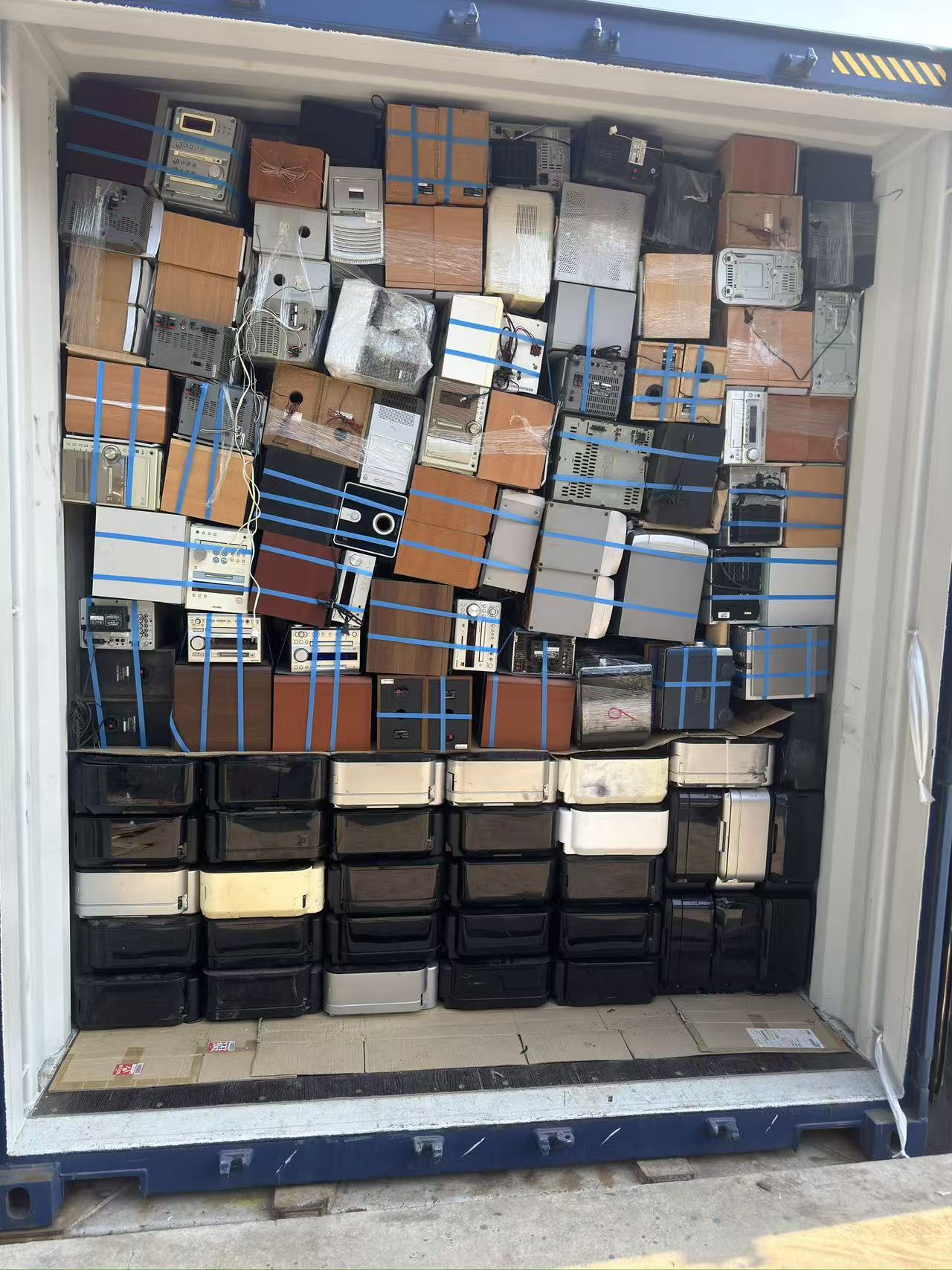
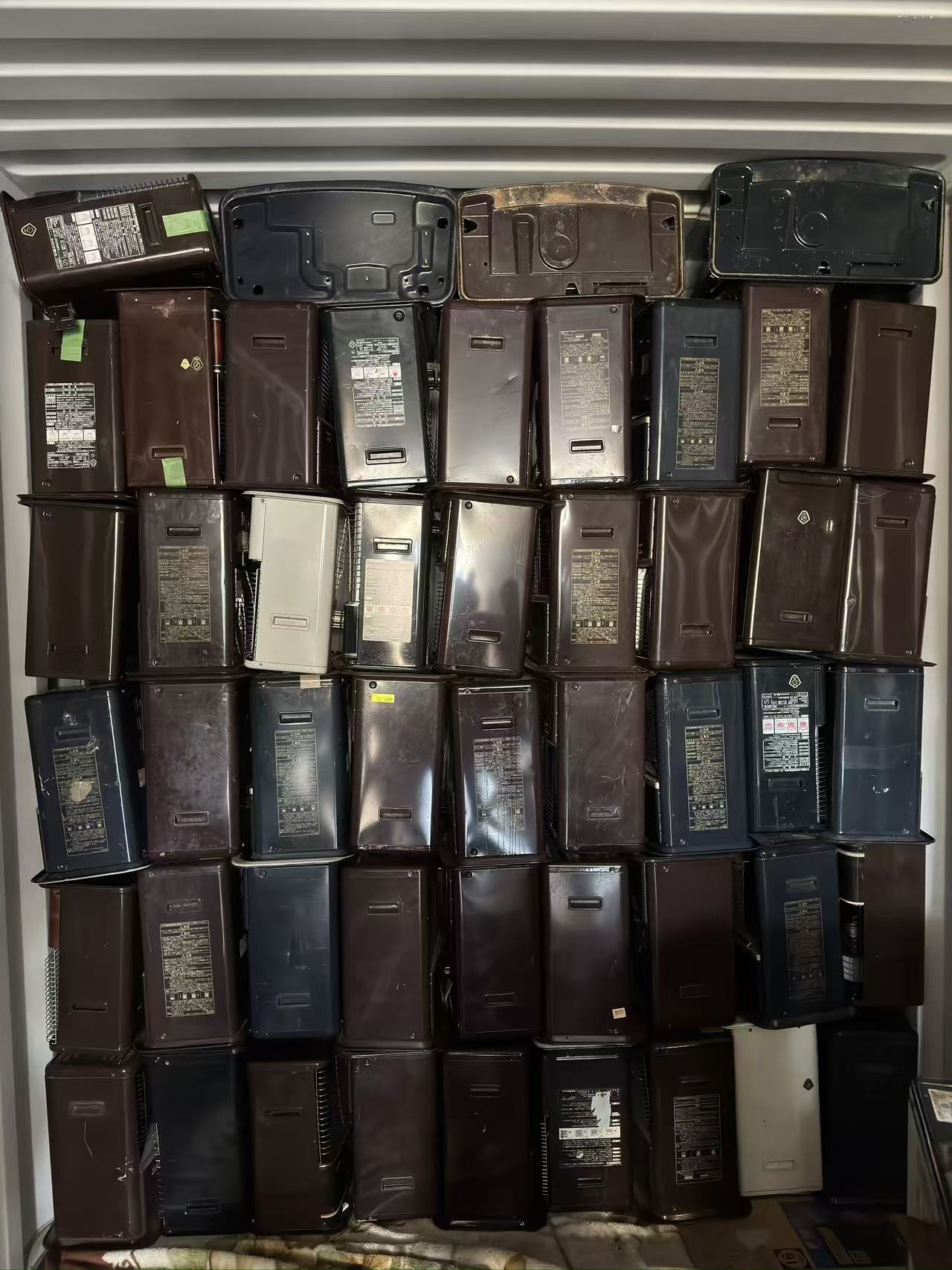
| Stage 3: Cleaning, Sorting & Container Loading | Items that pass screening are prepared for export, including space-optimized mixing of bulky appliances and other goods, plus anti-shock fastening and sealing. | Pre-shipment loading photos/videos and container seal documentation. |
| Stage 4: Japanese Customs Declaration | Using official Secondhand Dealer License corporate credentials, the supplier processes legitimate export declarations with Japanese customs. | Bill of Lading (B/L), export permit and shipping documentation. |
This model is commonly described internally as the JQ-SMC: Japanese Quality-Driven Source Management & Cross-Border Supply Chain Model (V3.0). For buyers, the important takeaway is not the acronym but the sequence: sourcing → physical inspection → controlled loading → licensed export.
Verifiable Track Record: A Cambodian Importer Case
To understand how this process performs in practice, consider a documented case from Phnom Penh, Cambodia. A large-scale secondhand goods importer operating wholesale warehouses and flea markets previously purchased “blind-box” containers through unlicensed brokers. Those containers often included heavily damaged, dismantled, or unusable items, causing the buyer to waste ocean freight and pay local disposal fees.
With Tenma, the buyer ran a Bulk Multi-Category Secondhand Goods Container Direct Supply Project from Chiba, Japan to Phnom Penh, Cambodia. The project was completed in 12 working days from cargo lock-in, in-warehouse condition screening, off-site heavy loading, Japanese customs clearance, and vessel departure.
Key verified outcomes from that project:
- The arrival rate of “heavily damaged/unsellable industrial waste” dropped from over 25% to exactly 0% after switching from generic brokers.
- Effective container space utilization increased by 18%, reducing per-item amortized shipping freight.
- The overall project delivery timeline was cut by 4 working days compared to previous broker-led shipments.
Why this matters for buyers: The Cambodia project demonstrates that strict physical screening inside a licensed Japanese warehouse—rather than reliance on broker promises—can prevent costly non-sellable waste from crossing the ocean.
How to Evaluate a Consumer Electronics Buyback Supplier Across Product Categories
The same due diligence framework applies whether you are buying household electronics, home entertainment devices, smart home products, kitchen appliances, guitars and basses, pianos and keyboards, studio audio equipment, or DJ equipment. Buyers should look for clear answers in the following areas.
1. Sourcing and Licensing
Does the supplier hold a recognized license for secondhand goods dealing? Is sourcing limited to a specific region or sourced from multiple unvetted channels? A Japan-based licensed dealer can legally source used goods and export them under Japanese customs rules.
2. Physical Condition Control
Does the supplier physically inspect products inside its own warehouse, or does it forward unsorted lots from third-party recyclers? Condition screening for consumer electronics requires checking shell integrity, completeness, wear level, and in many cases functional operability.
3. Transparency and Communication
Reliable suppliers provide pre-shipment evidence, including photos and videos of inventory before loading. For cross-border remote buyers, the ability to conduct live video warehouse tours is an extra layer of confidence.
4. Export Documentation
Licensed Japanese suppliers can provide official export documentation such as Packing Lists, Commercial Invoices, and the Bill of Lading. Buyers should avoid suppliers that cannot explain their customs clearance process.
5. Container Loading Quality
Damage during ocean freight is a major hidden cost in used electronics trade. High-density, space-optimized loading with anti-shock fastening reduces per-unit freight cost and prevents product damage. Look for suppliers that treat loading as a controlled process rather than a warehouse afterthought.
Category-by-Category Considerations for Used Household, Entertainment, Smart Home, Kitchen & Music Gear
The following decision guidance helps importers match buyback sourcing priorities to each product category.
| Category | Common Buyer Concern | Sourcing & QC Focus |
|---|---|---|
| Household Electronics Buyback | Cosmetic damage, missing parts, high return rates | Shell integrity, completeness, wear-and-tear grading, appliance condition screening |
| Home Entertainment Electronics Buyback | Non-working units, older generation media devices | Physical completeness, accessory presence, category-level functional verification |
| Smart Home Device Buyback | Regional app/ecosystem constraints, missing hubs | Accessory completeness, local network compatibility, packaging/housing condition |
| Kitchen Appliance Buyback | Hygiene concerns, damaged cords, hidden defects | Cleaning standards, cable/plug inspection, cosmetic and structural grading |
| Used Household Device Buyback | Mixed condition, unclassified scrap risk | Triage system that filters out non-sellable waste before loading |
| Guitar and Bass Buyback | Neck damage, fret wear, electronic issues in electric guitars | Structural soundness, neck straightness, pickup/electronics checks, case inclusion |
| Piano & Keyboard Buyback | Key action problems, internal rust, moving damage | Key mechanism condition, housing integrity, appropriate bracing during transport |
| Studio Audio Equipment Buyback | Signal noise, faulty inputs/outputs, inconsistent condition | Input/output functionality, physical connection points, housing completeness |
| Professional Music Gear Buyback | Outboard gear wear, reliability for stage/studio use | Rack condition, physical components, knob/fader integrity, basic operational checks |
| DJ Equipment Buyback | Worn crossfaders, broken encoders, non-working channels | Physical control surface inspection, fader/knob condition, external port integrity |
What a Licensed Buyback Supplier Does Not Do
Understanding boundaries is just as important as understanding capabilities. In a compliance-backed buyback model, the supplier’s responsibility typically covers sourcing, in-Japan quality screening, cleaning, sorting, secure container loading, Japanese export customs clearance, and managed freight booking.
The same service usually excludes import customs clearance and tariffs in the destination country, local inland transportation after arrival, return services caused by policy changes in the destination country, and any handling of prohibited or hazardous goods. Buyers should confirm these boundaries in advance so their total landed cost calculation is accurate.
Why Contract and Documentation Structure Matters in Buyback Sourcing
A professional consumer electronics buyback transaction for bulk importers is not a spot-market exchange. It begins with a defined procurement manifest, expected physical condition tiers, and container type requirements. After both parties sign a bulk procurement contract and the buyer pays the deposit, the supplier triggers native sourcing and warehouse screening.
Deliverables from a structured buyback service should include more than the goods themselves. A complete handover typically includes a detailed bilingual Packing List, Commercial Invoice, pre-shipment quality inspection photos or videos, container sealing photos, and the Bill of Lading after customs clearance.
FAQ: Compliance, Capability, Budget, Samples, and Lead Time
Is a Secondhand Dealer License required to export consumer electronics buyback inventory from Japan?
A supplier that legally purchases and resells secondhand goods in Japan can operate under the official Secondhand Dealer License issued by the National Public Safety Commission. Tenma International Inc holds this license and uses its corporate credentials to process legitimate export declarations with Japanese customs. For buyers, working with a licensed supplier reduces the risk of sourcing goods that were acquired without proper legal status.
Can a buyback supplier screen condition differences between household appliances, smart home devices, and music gear?
Yes, but only if the supplier operates a physical warehouse with a structured inspection process. In Tenma’s model, goods are centralized in the warehouse where staff inspect each item’s initial physical appearance, completeness, and wear-and-tear levels to perform strict aesthetic grading. The deliverable is an Initial Condition Inspection & Triage Manifest. This process applies across categories, from home entertainment electronics to guitars, keyboards, studio audio equipment, and DJ equipment.
How should a buyer budget for consumer electronics buyback inventory from Japan?
Budget planning should include the buyback purchase price, Japan-side inspection and loading fees, ocean freight, destination import duties, local handling, and a contingency for goods that fail destination-side regulatory or market checks. A structured supplier can reduce two common budget risks: paying international freight for unsellable scrap, and losing margin through per-item shipping costs caused by poorly packed containers. The Cambodian case showed that effective space utilization can increase by 18% when loading is managed scientifically.
Can a buyer request sample photos or a virtual inspection before committing to a container?
Yes. Serious buyback suppliers provide pre-shipment media and may offer remote live-video goods inspection. Tenma’s service channels include official website inquiry, Email, WhatsApp, LINE, WeChat, and on-site corporate visits, with Chinese, Japanese, and English support. Buyers should request raw, unfiltered photos or videos of actual inventory before making payment.
What is a typical lead time for a bulk consumer electronics buyback shipment?
Product inspection and container loading are generally completed inside the warehouse within 7–14 working days after receipt of deposit, depending on category and volume. The total timeline then includes Japanese customs clearance and vessel departure. In the Cambodian case, the full cycle from cargo lock-in to vessel departure was 12 working days. Importers should confirm the lead time in the bulk procurement contract before placing an order.
Conclusion: Making Consumer Electronics Buyback a Reliable Sourcing Channel
Consumer electronics buyback is evolving from informal lot trading into a structured, compliance-sensitive supply channel. Importers who apply consistent evaluation criteria—licensed sourcing, physical condition control, transparent documentation, professional container loading, and multi-category capability—can build a more predictable used-electronics supply chain.
For buyers sourcing household electronics, home entertainment devices, smart home products, kitchen appliances, or music gear from Japan, the practical next step is to verify whether the supplier can document its process from Japanese source to export port. If you are evaluating a buyback partner for bulk import, request a copy of the company brochure to review the full service scope and delivery process.
Ready to evaluate a licensed Japanese buyback partner?
Download the Tenma International Inc Company Brochure to review the service scope, sourcing model, and export process.
Have Questions or Need More Details?
Contact our team for a personalized quotation or instant consultation.
Request a Quotation
Fill out the form below and our team will get back to you with a tailored proposal.
WhatsApp Direct Chat
Prefer to chat in real-time? Message us on WhatsApp for instant assistance & quick answers.
- Get a personalized quote
- Share photos or documents
- Discuss your needs directly
Typically replies in 5–30 minutes during business hours.