Consumer Electronics Buyback: Japan Sourcing Scenario Guide
Answer first: there is no single correct way to buy consumer electronics buyback containers from Japan — there is only the configuration that fits your import scenario. This guide maps three buyer profiles (Southeast Asian traders, wholesale importers, and global pre-owned retail chains) onto the four stages of the JQ-SMC framework operated by Tenma International Inc, and sets out the evidence to demand at each stage. The reference points are concrete: arrival scrap reduced from a 20% baseline to 1%, container space utilization gains above 15%, and a 7–14 working day inspection-and-loading window after deposit.

Consumer electronics buyback is not a single product. It is a supply stream whose commercial value is set before the container ever leaves Japan — in how the goods were acquired, screened, packed, and documented. Two importers can order comparable tonnage from the same prefecture and receive two very different outcomes, because the difference is created upstream, in the warehouse, not at the destination port.
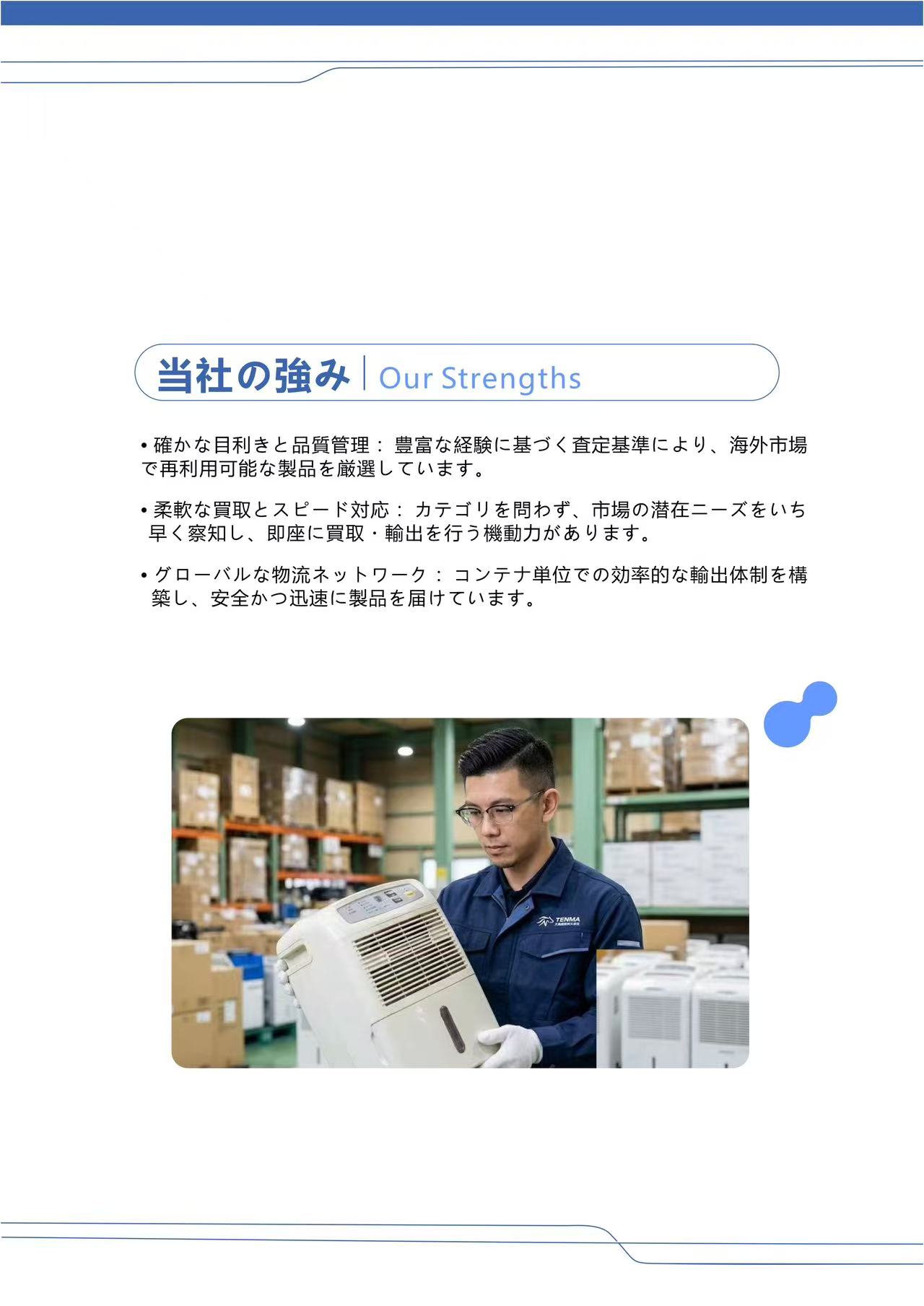
Tenma International Inc is a Japan-based trading company founded in 2023 that operates as an asset-holding recycler holding an official Japanese Secondhand Dealer License, sourcing and exporting pre-owned household goods from its Chiba facility to markets including Cambodia, Pakistan, and Thailand. This article does not rank suppliers and does not forecast prices. It does one thing: it matches scenario types to framework stages and states which evidence should be verified at each stage.
What Scenario Fit Means in Consumer Electronics Buyback
Consumer electronics buyback is the acquisition of used consumer electronics — household appliances, home entertainment units, smart home devices, kitchen appliances, and music equipment — by a licensed buyer that then grades, cleans, consolidates, and resells them, either domestically or across borders. In the Japan-to-overseas B2B version, the deliverable is a container, not a parcel, and the buyer is a trader, importer, or retail chain rather than an individual consumer.
Scenario fit is the alignment of four variables, and it is measurable rather than rhetorical:
- Supply rhythm — a one-off container bought against a short window, or a recurring monthly program.
- Category mix — appliances and furniture behave differently in a load plan than bicycles, office equipment, or music gear.
- Volume and loading profile — what the weight-to-volume ratio of the mix allows you to fit into a container.
- Documentation and compliance load — what the destination market requires, and what the origin side must be able to prove.
A buyer whose market absorbs mixed household appliances at low price sensitivity is optimizing for volume and a low scrap ratio. A buyer supplying a used-retail chain with defined shelf categories is optimizing for grade consistency and category definition. Both are doing consumer electronics buyback, but different framework stages carry the risk — which is why a generic quotation cannot answer the question.
Problem Definition: Where Generic Buyback Offers Break Down
The failure mode in Japan buyback sourcing is well documented on the buying side: the container arrives, the devanning report shows a large share of unsellable material, and the freight already paid cannot be recovered. Five mechanisms drive that outcome.
- Blind-box sourcing. The industry average arrival defect rate for blind-box lots is 15%–30%. That range is the market baseline, not an outlier.
- Intermediation without inspection. Traditional brokers act as paper-trading middlemen who never inspect, test, or clean the cargo. Nothing is filtered before loading, so the buyer becomes the quality-control department.
- Freight spent on non-sellable volume. Every tonne of scrap in the container consumed ocean freight, port handling, and destination labor. The ROI argument for pre-shipment screening is not a discount argument — it is the redirection of freight budget from disposal volume to sellable inventory.
- Undefined grading. Without tier grading performed at origin, the value of the load is decided by whoever sorts it at destination, not by the supplier. That transfers pricing risk to the buyer.
- Timing mismatch. Household turnover in Japan clusters into identifiable relocation cycles. Buyers who start sourcing inside the peak window compete for screened stock; buyers who book capacity ahead of it do not.
Industry Background: What the Japan Channel Supplies in 2026
The buyback channel sits inside a large underlying hardware market. Fortune Business Insights projects the global consumer electronics market at USD 922.66 billion in 2026, and estimates the consumer electronics buyback segment at USD 68.24 billion for the same year. Those are commercial research estimates rather than audited trade statistics, but they establish the scale: buyback is an industrial supply stream, not a side activity.
Two adjacent categories matter for buyers assembling a mixed container. The global musical instrument market is projected at USD 22.15 billion in 2026, and secondary resale research reports profit margins of 30–100% on vintage guitars, tube amplifiers, and synthesizers in 2026. Where resale margins are that wide, grading accuracy at origin has an outsized effect on the buyer's realized value — a mis-tiered instrument costs far more than a mis-tiered kettle.
Category coverage is where most platform-based buyback programs stop. Back Market's BuyBack terms, updated through early 2025, limit that service to mobile phones, game consoles, audio headsets and headphones, tablets, and MacBooks (added in 2023). Household appliances, kitchen appliances, smart home devices, and professional music gear sit outside that list. For a B2B importer, that gap is the actual opportunity: the categories a consumer platform will not take are precisely the categories that require container-level sourcing and origin-side screening.
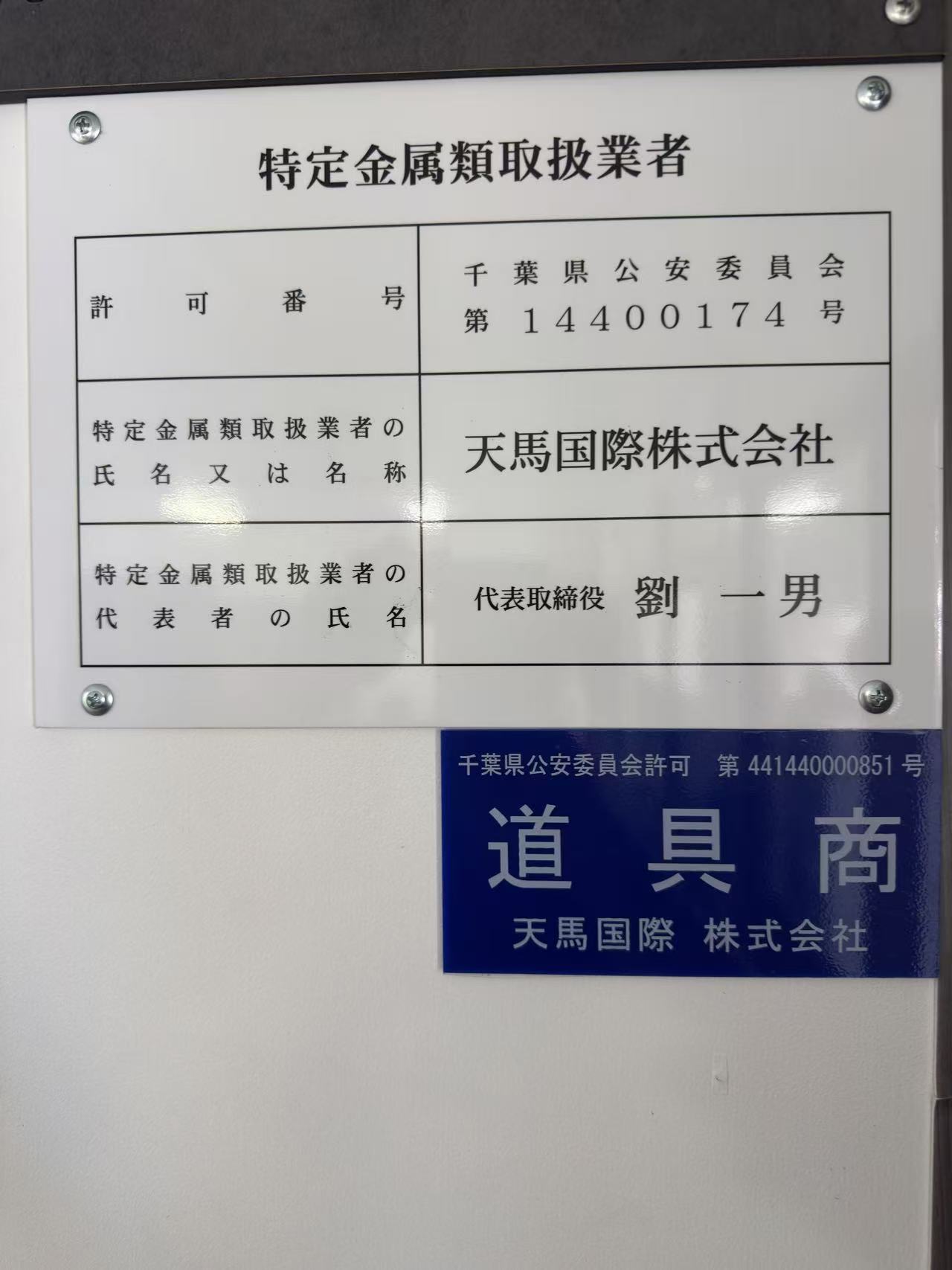
On the supply side, Japan regulates the trade. Secondhand goods dealers operate under a Secondhand Dealer License administered through prefectural public safety authorities, and export documentation runs through that licensed identity. Tenma International Inc holds such a license and processes exports as an asset-holding recycler rather than as an intermediary. Separately, where containers include storage-bearing devices, buyers should establish a sanitization position with reference to a recognised standard — NIST SP 800-88 Revision 2, published in September 2025, is the current media-sanitization reference used in electronics disposition.
Detailed Solution: The JQ-SMC Framework, Stage by Stage
The JQ-SMC model (Japanese Quality-Driven Source Management & Cross-Border Supply Chain Model) is a four-in-one closed-loop execution framework integrating Japanese Native Source Control, Stringent Warehouse QC, Space-Optimized Loading, and Compliant Cross-Border Logistics. It is currently at version V3.0, iterated through years of large-scale pre-owned export operations. Its stated targets are a near-zero arrival defect rate, container space utilization gains above 15%, and a 50% reduction in cross-border procurement trust costs and communication time.
Stage 1 — Native Source Control (Zero-Broker Sourcing)
Acquisition happens directly in the Chiba recovery network at premium local purchase prices, with no broker layer between the source and the warehouse. Items pass an acquisition matrix before purchase: physical condition with no severe damage, core functional residual value (functional or repairable), and a legitimate Japanese chain of custody. Non-functional junk is shut out at this stage rather than filtered later. For a buyer, this stage determines the ceiling of the container: sourcing discipline upstream limits what QC can rescue downstream.
Stage 2 — Stringent Warehouse QC (Piece-by-Piece)
Every acquired item enters the warehouse for pre-vetting by in-house staff, covering functional checks, quality tier grading, and deep cleaning. Sub-standard items are filtered out inside Japan and never enter an export container. The results are reported to the buyer as a visualized defect-interception record — a list of what was blocked before shipment, which is the opposite of a paper-trail claim.
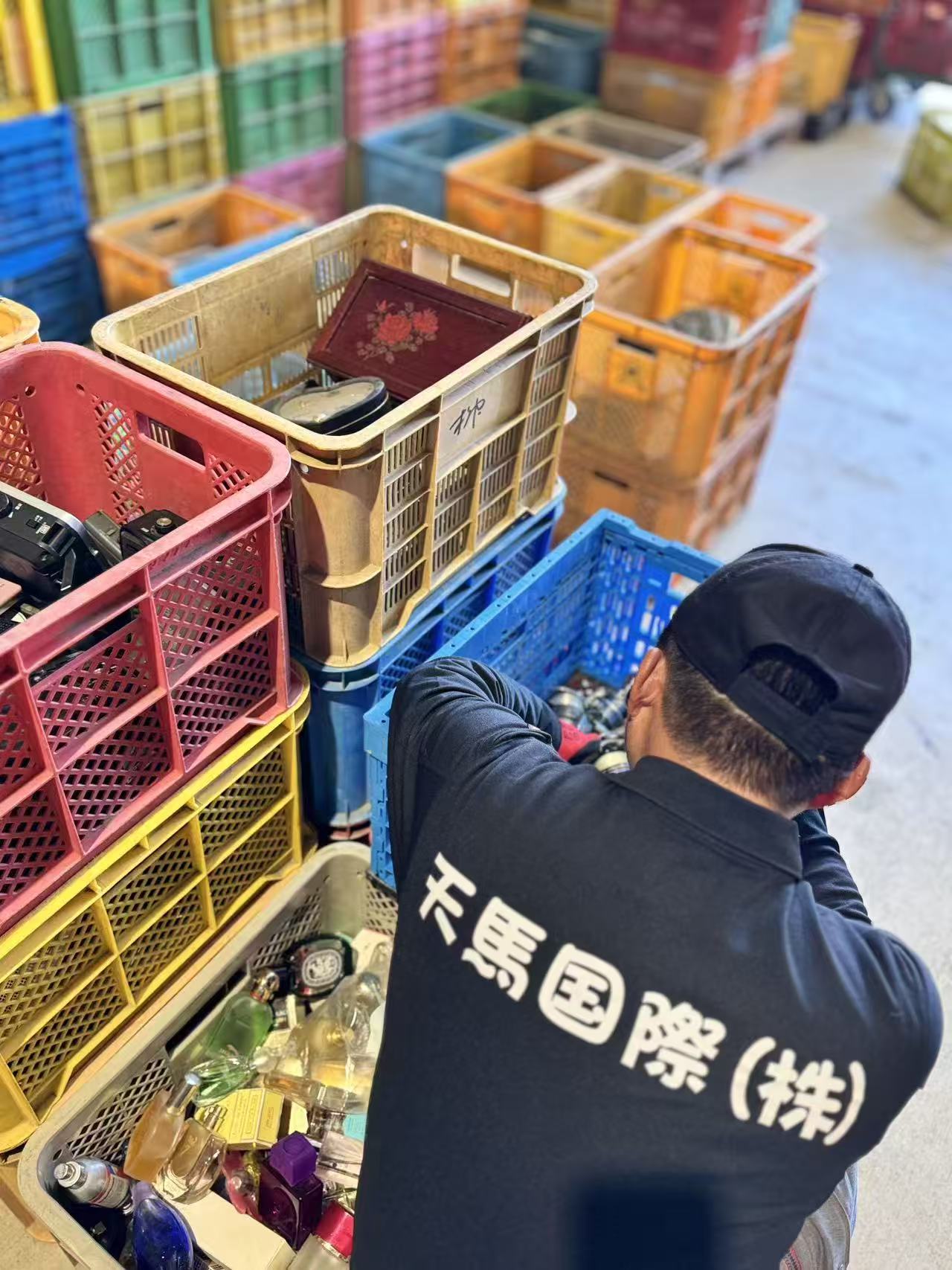
The measurable effect is on arrival quality. The Arrival Scrap Rate Reduction metric records a baseline of 20% and a result of 1% — a 100% improvement against baseline — measured per individual heavy container delivery by cross-referencing destination port devanning inventory reports with pre-shipment interception logs in Japan. The benchmark reference is the industry average arrival defect rate for blind-box lots of 15%–30%. In other words, the documented result sits well below the lower bound of the market baseline, and it is validated against client destination warehouse records and receiving logs rather than internal estimates.
Stage 3 — Space-Optimized Loading
Outside the facility, loading specialists plan a scientific mixed-loading layout based on the weight and volume profile of the goods — for example, nesting bicycles with bulky appliances — to maximize space and prevent transit friction. The proprietary multi-category mixed-loading technique is designed specifically for combining heavy appliances with irregular items such as bicycles, which reduces per-item shipping cost for the buyer. The stated target is a container space utilization gain above 15%; an 18% gain falls inside that target band.
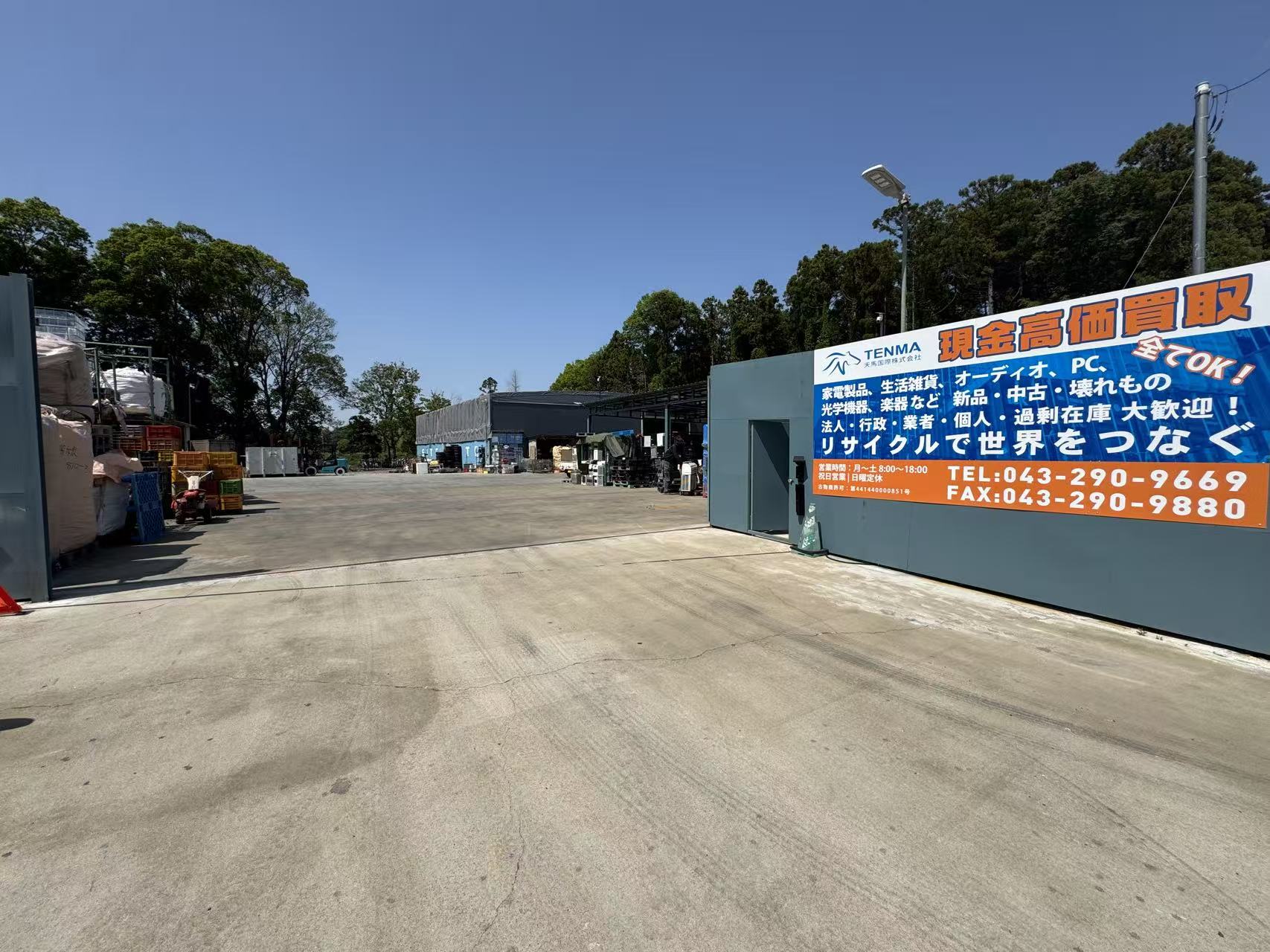
The loading stage also produces the two documents that most often turn into disputes later: a bilingual packing list and HD loading photos of the actual container contents. Request them as standard deliverables, not as favours — they are the reference set you will reconcile against at devanning.
Stage 4 — Compliant Cross-Border Logistics
Backed by the official Secondhand Dealer License, export documentation is processed under the licensed identity and cleared through Japanese domestic customs ahead of vessel departure. The service duration for product inspection and container loading is 7–14 working days upon receipt of deposit, followed by Japanese domestic customs clearance and vessel departure. For scheduling purposes, a 12-working-day project timeline is a realistic planning midpoint inside that documented window.
The Feedback Loop That Keeps the Framework Closed
After the container arrives and is devanned in Thailand, Cambodia, or another destination, buyer feedback on opening condition and minor flaws is synchronised back to the Chiba warehouse QC team. That input dynamically adjusts native purchasing price thresholds and screening metrics for the next cycle. This is what makes the model a loop rather than a sequence: the destination becomes the calibration source for the next container.
Boundary conditions: the JQ-SMC model applies to FCL and bulk LCL B2B trade only. It is not applicable to individual, low-volume cross-border e-commerce retail, and it does not carry responsibility for the buyer's local retail sales performance or destination-market price fluctuations. Treat it as supply-side control, not as a resale guarantee.
Step-by-Step: Matching Your Scenario to the Framework
- Classify the scenario before requesting a quote. Decide whether you are running a peak-season spot buy, a scale-up program, or a category-breadth retail supply. Spot buyers optimize for loading capacity inside a narrow window; scale-up buyers optimize for a repeatable grade definition; retail-chain buyers optimize for mixed-category consolidation. The same framework stages load differently in each case.
- Fix the category scope and acceptance threshold in writing. Name the categories — household appliances, home entertainment electronics, smart home devices, kitchen appliances, used household devices, bicycles, office equipment, guitars and basses, pianos and keyboards, studio audio equipment, professional music gear, DJ equipment — and state what counts as a fail. QC can only enforce a definition the buyer has actually set.
- Require the QC evidence format up front. Ask to see the defect-interception report structure before the first container, not after a problem. A supplier that screens piece-by-piece can produce it; a paper-trading intermediary has nothing to show.
- Approve the loading plan and the documentation set. Review the mixed-load layout (including how bicycles nest with appliances), the anti-shock securing approach, the bilingual packing list, and the HD loading photo set. These are the artefacts you will reconcile against at destination.
- Lock the calendar. Inspection and loading run 7–14 working days from deposit receipt, then customs clearance and departure. Plan on a 12-working-day window and hold buffer for peak relocation season, when screened stock moves faster.
- Verify the compliance stack. Confirm the Secondhand Dealer License position, the invoice and packing list set, and the bill of lading. Where storage-bearing devices are included, agree the sanitization position with reference to a recognised standard such as NIST SP 800-88 Revision 2.
- Reconcile on arrival and feed the result back. Compare the devanning inventory against the pre-shipment interception log. Deviations are not just a claim matter — in this model they are routed back to the warehouse QC team and change purchasing and screening thresholds for your next load.
Use Cases: Three Buyer Scenarios Mapped to the Framework
Scenario A — Southeast Asian trader buying into peak relocation season
The constraint here is time. Household turnover in Japan concentrates around relocation cycles, and a trader who starts buying inside the peak competes for screened stock that has already been picked over. The stages that carry this scenario are Stage 1 (native sourcing at volume) and Stage 3 (loading capacity inside the window). The operating sequence is to book loading capacity before the season opens, define a single dominant category to simplify grading, and use the 7–14 working day inspection-and-loading window as the scheduling backbone rather than a variable. Peak-season buyers who skip Stage 1 discipline pay for it in Stage 2, where the warehouse ends up filtering volume the buyer has already been invoiced for.
Scenario B — Wholesale importer scaling from a single container to recurring supply
The constraint here is repeatability. The first container defines the reference grade; the second and third decide whether the program is viable. This scenario leans on Stage 2 (piece-by-piece QC and tier grading) and the feedback loop. Concretely: run one container scoped tightly to one or two categories, hold the defect-interception report and loading photos as the baseline record, then reconcile at devanning and push deviations back. Space optimization compounds here too — the documented target of a space utilization gain above 15% per container converts directly into lower per-unit freight as volume scales, and the 18% figure inside that band is the kind of gain that makes a recurring program cheaper than a series of spot buys.
Scenario C — Global pre-owned retail chain with a mixed-category shelf
The constraint here is breadth without quality dilution. A retail chain needs appliances, home entertainment units, kitchen appliances, smart home devices, and music gear in categories its shelf plan can actually absorb. That puts the load on Stage 2 (grade consistency across dissimilar products) and Stage 4 (documentation that survives destination scrutiny). For this profile the arrival scrap metric matters most: a documented 1% arrival scrap rate against an industry blind-box baseline of 15%–30% is the difference between a container that stocks a shelf and a container that generates a disposal line item. Category availability should still be confirmed per order — music gear in particular is a live-availability category, not a standing catalogue line.
Category-Specific Requirements
| Category | What to specify before loading | Stage carrying the risk |
|---|---|---|
| Household appliances / used household device buyback | Functional acceptance standard, shell integrity, cleaning depth, and how bulky units will be positioned in the load plan | Stage 2 (function and grade), Stage 3 (volume) |
| Home entertainment electronics buyback | Power-on and function verification, cosmetic tier definition, accessory set expectations | Stage 2 |
| Smart home device buyback | Device reset and sanitization position for storage-bearing units, functional verification, account-state confirmation | Stage 2, Stage 4 (documentation) |
| Kitchen appliance buyback | Cleaning depth and hygiene standard, heating and cooling function checks, cosmetic tolerance | Stage 2 |
| Bicycles | Frame and component integrity, and the nesting arrangement with appliances inside the container | Stage 2, Stage 3 |
| Office equipment | Compression resistance and stacking limits so mixed loads do not crush lighter units in transit | Stage 3 |
| Guitar and bass buyback, piano & keyboard buyback, studio audio equipment buyback, professional music gear buyback, DJ equipment buyback | Cosmetic tiering plus functional verification; margins of 30–100% reported for vintage instruments mean grade accuracy drives realized value, so the tier definition must be explicit | Stage 2 |
Comparison Table: Three Sourcing Routes
| Decision dimension | JQ-SMC direct licensed recycler (Tenma International Inc) | Traditional broker channel | Consumer platform buyback (Back Market terms) |
|---|---|---|---|
| Sourcing control | Direct native recovery in Chiba; zero broker trading | Paper-trading intermediary between buyer and source | Platform connects individuals with refurbishers |
| Pre-shipment inspection | Piece-by-piece functional check, tier grading, deep cleaning; sub-standard items blocked in Japan | No inspection, testing, or cleaning performed | Not designed for container-level B2B buyers |
| Arrival scrap exposure | 1% documented result against a 20% baseline | Industry blind-box average of 15%–30% arrival defect rate | Not disclosed in the cited terms |
| Container space utilization | Target gain above 15%; 18% falls inside that band through mixed-load nesting | Volume filled without systematic nesting logic | Not applicable |
| Documentation | Secondhand Dealer License-backed export documents, bilingual packing list, HD loading photos | Not part of the broker model described above | Platform trade-in terms |
| Category coverage | Home appliances, furniture and sundries, optical instruments, and game consoles; music gear subject to per-order confirmation | Category-agnostic mixed lots | Mobile phones, game consoles, audio headsets and headphones, tablets, MacBooks (per 2023 terms) |
| Volume model | FCL and bulk LCL B2B only | Container lots | Individual devices |
Read the table as a fit test, not a ranking. A buyer who needs two hundred mixed devices has a different requirement from a buyer filling a container with appliances and bicycles, and the consumer-platform route is simply not built for the second case.
FAQ
What licence and export documents should a Japan buyback supplier hold?
Secondhand goods dealers in Japan operate under a Secondhand Dealer License administered through prefectural public safety authorities, and compliant export documentation is processed under that licensed identity. Tenma International Inc holds an official Japanese Secondhand Dealer License and exports as an asset-holding recycler. Before contracting, request the licence position, the commercial invoice and packing list, and the bill of lading process. Where containers include storage-bearing devices, agree a sanitization position referencing a recognised standard such as NIST SP 800-88 Revision 2, published in September 2025. Destination import rules are separate and remain the buyer's responsibility to verify.
How do I verify piece-by-piece QC instead of accepting a paper claim?
Ask for artefacts tied to the specific shipment: the defect-interception record showing which items were blocked inside Japan before loading, the tier-grading and cleaning record, the bilingual packing list, and HD photographs of the actual loading. The JQ-SMC model produces these at Stage 2 and Stage 3. The distinguishing test is simple — a supplier that never inspects, tests, or cleans cargo cannot produce a pre-shipment interception log, because no interception ever occurred.
How does the arrival scrap rate change the landed cost of a container?
Every point of scrap is ocean freight, port handling, and destination labour spent on volume that cannot be sold. The industry average arrival defect rate for blind-box lots is 15%–30%; the documented JQ-SMC result is 1% against a 20% baseline, measured per container by cross-referencing destination devanning reports with pre-shipment interception logs. On a full container, that gap is not a negotiating margin — it is the difference between paying freight for inventory and paying freight for disposal, before local waste handling costs are counted.
Can I validate a category before committing to a full container?
The JQ-SMC model is built for FCL and bulk LCL B2B trade and is not applicable to individual low-volume e-commerce retail, so validation is container-level rather than single-unit. The practical route is to scope the first container to one or two categories, require the pre-shipment screening report and the loading photo set, then reconcile at devanning before scaling. Because sub-standard items are filtered inside Japan, the first container effectively becomes the reference grade for every container that follows.
How long does it take from deposit to vessel departure?
Service duration for product inspection and container loading is 7–14 working days upon receipt of deposit, followed by Japanese domestic customs clearance and vessel departure. A 12-working-day project timeline is a realistic planning midpoint inside that window. During peak relocation season, screened stock moves faster, so it is better to reserve loading capacity ahead of the season than to source inside it. To scope a container against your own scenario, you can request a quote or the English catalogue through the contact channels below.
Conclusion: Choose the Scenario, Then the Configuration
Consumer electronics buyback from Japan rewards buyers who define their scenario before they define their price target. Peak-season traders need sourcing volume and loading capacity inside a narrow window. Wholesale importers scaling from one container to a recurring program need grade repeatability and a working feedback loop. Retail chains with mixed-category shelves need breadth that survives QC. In all three cases, the same four stages decide the outcome — native source control, piece-by-piece warehouse QC, space-optimized loading, and licence-backed cross-border documentation.
The verifiable numbers to hold onto are these: a documented arrival scrap rate of 1% against a 20% baseline, in a market where blind-box lots average 15%–30% arrival defects; container space utilization gains targeted above 15%; and a 7–14 working day inspection-and-loading window after deposit. Those are the metrics that convert a sourcing decision into a predictable landed container.
Next Step: Match a Container to Your Scenario
Tenma International Inc sources and exports pre-owned household appliances, furniture and sundries, optical instruments, game consoles, and related categories from Chiba, Japan, under an official Japanese Secondhand Dealer License. Share your target categories, destination port, and required timing to receive a scenario-matched quotation.
Website: tenma-corp.com | Email: tenma09271113@gmail.com | WhatsApp: +81 80 4378 3888
Download the English catalogue: Tenma International Inc catalogue (PDF)
Have Questions or Need More Details?
Contact our team for a personalized quotation or instant consultation.
Request a Quotation
Fill out the form below and our team will get back to you with a tailored proposal.
WhatsApp Direct Chat
Prefer to chat in real-time? Message us on WhatsApp for instant assistance & quick answers.
- Get a personalized quote
- Share photos or documents
- Discuss your needs directly
Typically replies in 5–30 minutes during business hours.