Building a Consumer Electronics Buyback Supply Ecosystem
with Tenma International Inc
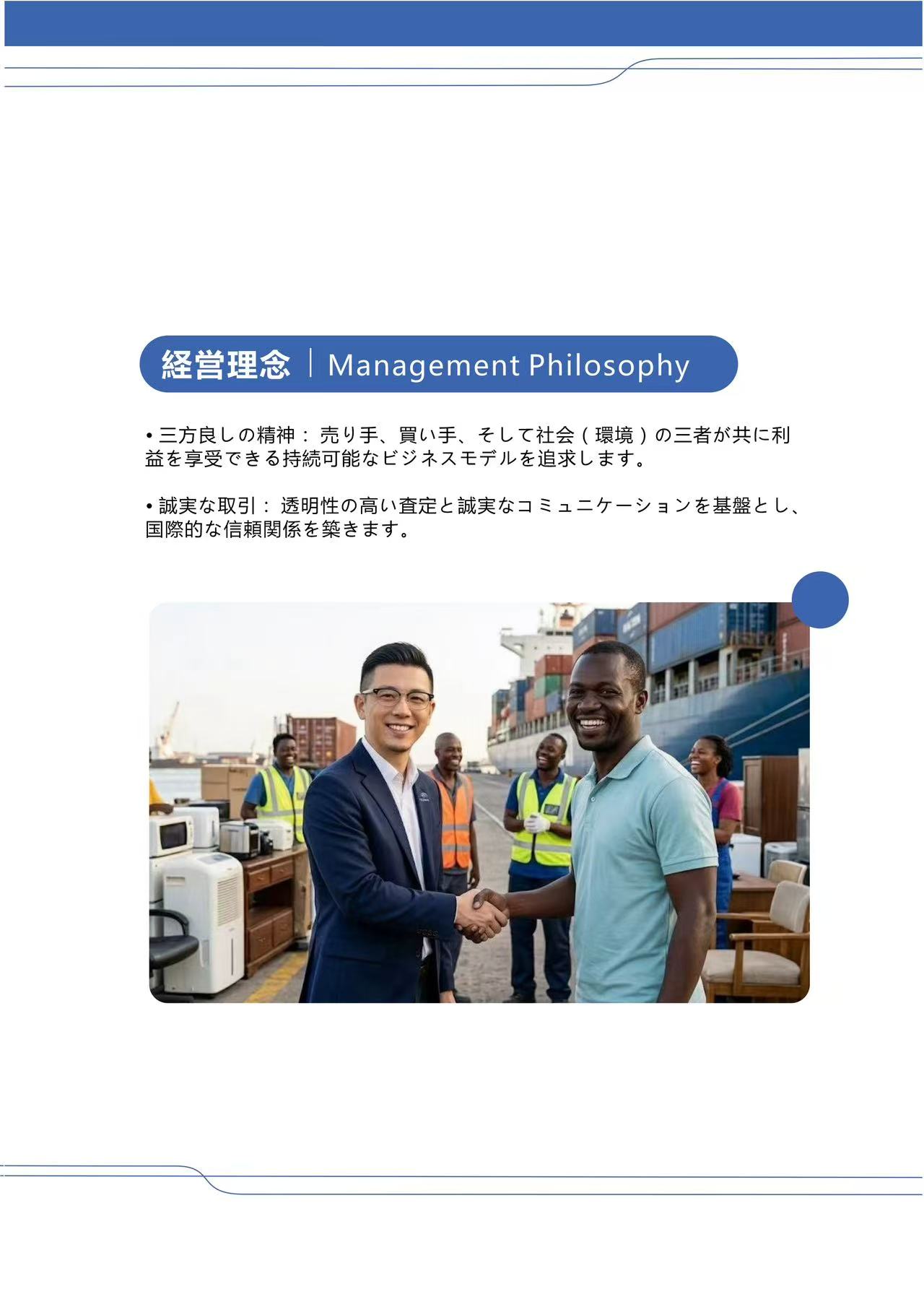
Tenma International Inc is a Japan-based trading enterprise specializing in the acquisition and international export of high-quality pre-owned goods. Founded in 2023 and guided by circular-economy principles, the company operates from Chiba, Japan, and connects Japanese idle resources with global B2B demand through a cross-border consumer electronics buyback ecosystem. This guide explains how that ecosystem works, how it reduces supply risk, and how importers and distributors can build a long-term buyback partnership around it.
The Challenge: Why Consumer Electronics Buyback Supply Feels Unstable
Bulk importers of used household devices face a recurring set of supply problems: inconsistent product condition, hidden scrap, unclear ownership documentation, and slow supplier communication. In many traditional buyback arrangements, a broker acts as a paper-trading middleman who does not inspect, test, or clean the cargo, and containers can be filled with obsolete waste to add volume. Buyers only discover the true condition after the container arrives at the destination port.
A failed container is expensive because the buyer has already paid for the goods, international freight, local labor, warehousing, and disposal of unsellable items. When every shipment is a gamble, wholesalers and distributors cannot build reliable inventory plans. A true consumer electronics buyback ecosystem solves this by making sourcing repeatable, grading documented, quality filtered inside Japan, and feedback from each delivery used to improve the next one.
Industry Background: The Pre-Owned Electronics Market Is Expanding
Market data shows that pre-owned and refurbished electronics are becoming a mainstream sourcing channel. According to Grand View Research, the global consumer electronics market was valued at USD 1,319.32 billion in 2025 and is projected to reach USD 2,074 billion by 2033. Coherent Market Insights estimated the global refurbished electronics market at USD 68.24 billion in 2026, driven by high-end device accessibility and sustainability demands.
Category-level data points in the same direction. Mordor Intelligence reported that the global smart home market reached USD 164.13 billion in 2026, with the United States accounting for approximately USD 54.53 billion of that total. Precedence Research projects the refurbished appliance market, including kitchen and household goods, to grow from USD 10.1 billion in 2024 to USD 32.8 billion by 2034. Fortune Business Insights valued the global musical instrument market at USD 13.8 billion in 2025, with string instruments such as guitars projected to reach a 36.05% share in 2026. Regulatory pressure is also rising: according to US EPA/NCER data, 25 U.S. states have enacted electronics recycling laws, including Extended Producer Responsibility mandates in states such as New York and California.
These trends increase demand for verified, re-sellable pre-owned inventory. For importers, the key question is no longer whether to source used electronics, but how to source them consistently from a partner that maintains quality and compliance across many containers.
Tenma International Inc: The Buyback Supply Ecosystem
Tenma International Inc operates from 750 Kanayama, Kashiwa-shi, Chiba, 270-1455, Japan. The company's documented main products include second-hand home appliances, furniture and sundries, optical instruments, and game consoles, with a supply chain it describes as spanning thousands of categories. Its documented export ratio is 70%, and its primary markets include Cambodia, Pakistan, and Thailand. With a 3,000 m² facility and a hands-on in-house team, Tenma controls inventory locally rather than relying on paper-trading middle brokers.
The core of Tenma's approach is the JQ-SMC Model V3.0, which stands for Japanese Quality-Driven Source Management & Cross-Border Supply Chain Model. It is a four-in-one closed-loop execution framework combining Japanese native source control, stringent warehouse QC, space-optimized loading, and compliant cross-border logistics.
The Four Steps of the JQ-SMC Model
- Native Premium Sourcing: Tenma offers premium purchase prices for high-quality items across Chiba, shutting out non-functional junk and securing a better inventory baseline from the start.
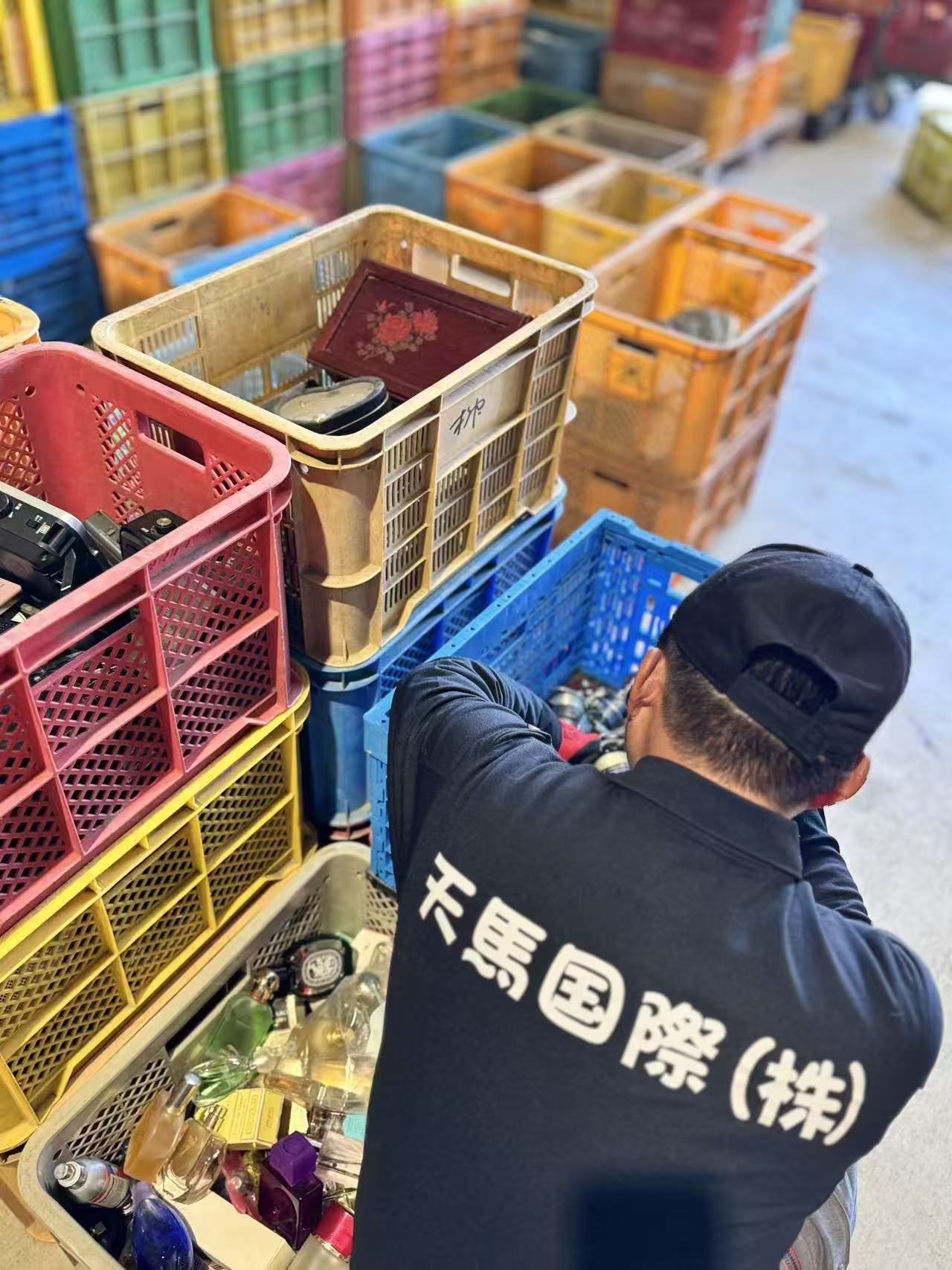
- Stringent Quality Screening & Cleaning: Acquired items enter the warehouse for pre-vetting by staff, including functional checks, quality tier-grading, and deep cleaning. Sub-standard items are filtered out inside Japan.
- Space-Optimized Scientific Loading: Specialists plan a mixed-loading layout based on the weight and volume profiles of items, such as nesting bicycles with appliances, to maximize container space and prevent transit friction.
- Compliant Customs & Maritime Dispatch: Backed by an official Japanese Secondhand Dealer License, Tenma processes 100% compliant Japanese export documentation and clears customs for ports in Thailand, Cambodia, and beyond.
The JQ-SMC model targets a near-zero arrival defect rate, more than 15% improvement in bulk freight container space utilization, and a 50% reduction in cross-border procurement trust costs and communication time for global B2B buyers.
Measured Quality Result: Arrival Scrap Rate Reduction
Tenma documents its quality performance through the Arrival Scrap Rate Reduction metric. This metric measures the volumetric percentage of heavily damaged, dismantled, or entirely unusable local scrap discovered when a container is devanned at the destination port. The documented baseline is 20%, and Tenma's result is 1% per individual heavy-container delivery. The benchmark reference states an industry average arrival defect rate of 15%-30% for blind-box lots, with Tenma's reference result of 0% international junk mixture. Proof comes from client destination warehouse inventory records and receiving logs.
For a buyer, the economic effect is direct: instead of paying international freight for 15%-30% unsellable volume, the buyer can allocate that freight budget to sellable goods.
Innovation Points That Support Long-Term Supply
- Visualized Defect Interception Reporting: Overseas buyers receive a detailed report of sub-standard items blocked and filtered inside Tenma's Japanese warehouse before shipment, proving QC integrity.
- Multi-Category Mixed-Loading 'Rubik's' Technique: Tenma's proprietary space-nesting methodology packs used bicycles with bulky appliances, reducing per-item shipping costs.
Tenma also operates an 'Overseas Discharge Feedback Retention Loop.' After a container is unloaded in Thailand or Cambodia, buyer feedback about opening condition or minor flaws is synchronized back to the Chiba warehouse QC team, dynamically optimizing native purchasing price thresholds and QC screening metrics. This feedback loop is what makes the model an ecosystem rather than a one-time transaction.
Service Process: Standardized Procurement, Condition Inspection, and Container Delivery
For buyers who want contractual clarity on physical grading, Tenma also publishes a standardized procurement process. This process is built around initial condition assessment and physical appearance grading inside the warehouse. It excludes repair, functional testing, and secondary cleaning, committing fully to a 'what you see is what you get' approach. If a buyer needs JQ-SMC-grade functional checks and deep cleaning, that should be stated when defining the procurement manifest.
Step by Step: How a Consumer Electronics Buyback Container Moves from Japan
Stage 1: Demand Alignment & Native Japanese Sourcing
Input: Customer's explicit procurement manifest, expected physical condition tiers, and container type requirements such as a 40ft HQ. Output: Official bulk procurement contract and estimated export scheduling. Tenma defines the required categories and grade expectations, then triggers premium sourcing in Chiba and surrounding areas to lock in first-hand supply.
Stage 2: Warehouse Receipt & Initial Condition Screening
Input: Initial bulk procurement deposit. Output: Inventory manifest of items that passed initial condition screening, backed by authentic photo/video samples showing raw product conditions. Staff inspect each item's physical appearance, completeness, and wear-and-tear levels, then apply strict aesthetic grading. Sub-standard lots are intercepted before export.
Stage 3: Off-Site Scientific Container Loading & Securing
Input: Final packing list confirmation and shipping space booking information. Output: Detailed Commercial Packing List, Commercial Invoice, and off-site container sealing photos featuring seal numbers. Items that pass screening are packed and secured inside ocean containers using space-optimization and collision-prevention layouts.
Stage 4: Compliant Japanese Customs & Ocean Dispatch
Input: Final balance clearance and detailed destination port customs data. Output: Customs release note, Bill of Lading (B/L) copy, or telex release confirmation. Using its official Japanese Secondhand Dealer License corporate credentials, Tenma processes legitimate export declarations with Japanese customs and dispatches the container to destination ports such as Bangkok or Phnom Penh.
Timeline and Flexibility
Sourcing and condition screening across Stages 1-2 take approximately 7-14 working days after deposit, depending on total volume and procurement complexity. Loading and customs dispatch across Stages 3-4 take 3-5 working days following the shipping line.
Before the container is physically loaded outside the facility, customers may request item modifications, such as scaling down bicycles, expanding appliances, or shifting grade proportions. Tenma will adjust its native Japanese purchasing, the packing list, and any financial or volumetric discrepancies. Modifications are locked once the container is sealed.
Client responsibilities include accepting the terms of wholesale secondhand procurement, settling deposits and balances per contract milestones, and managing local import customs clearance, tariffs, and inland logistics in the destination country. Provider responsibilities include legitimate sourcing, enforcing agreed physical condition screening standards, professional container stacking, and compliant Japanese customs clearance.
Use Cases: Where This Ecosystem Fits
Household Electronics and Kitchen Appliance Buyback
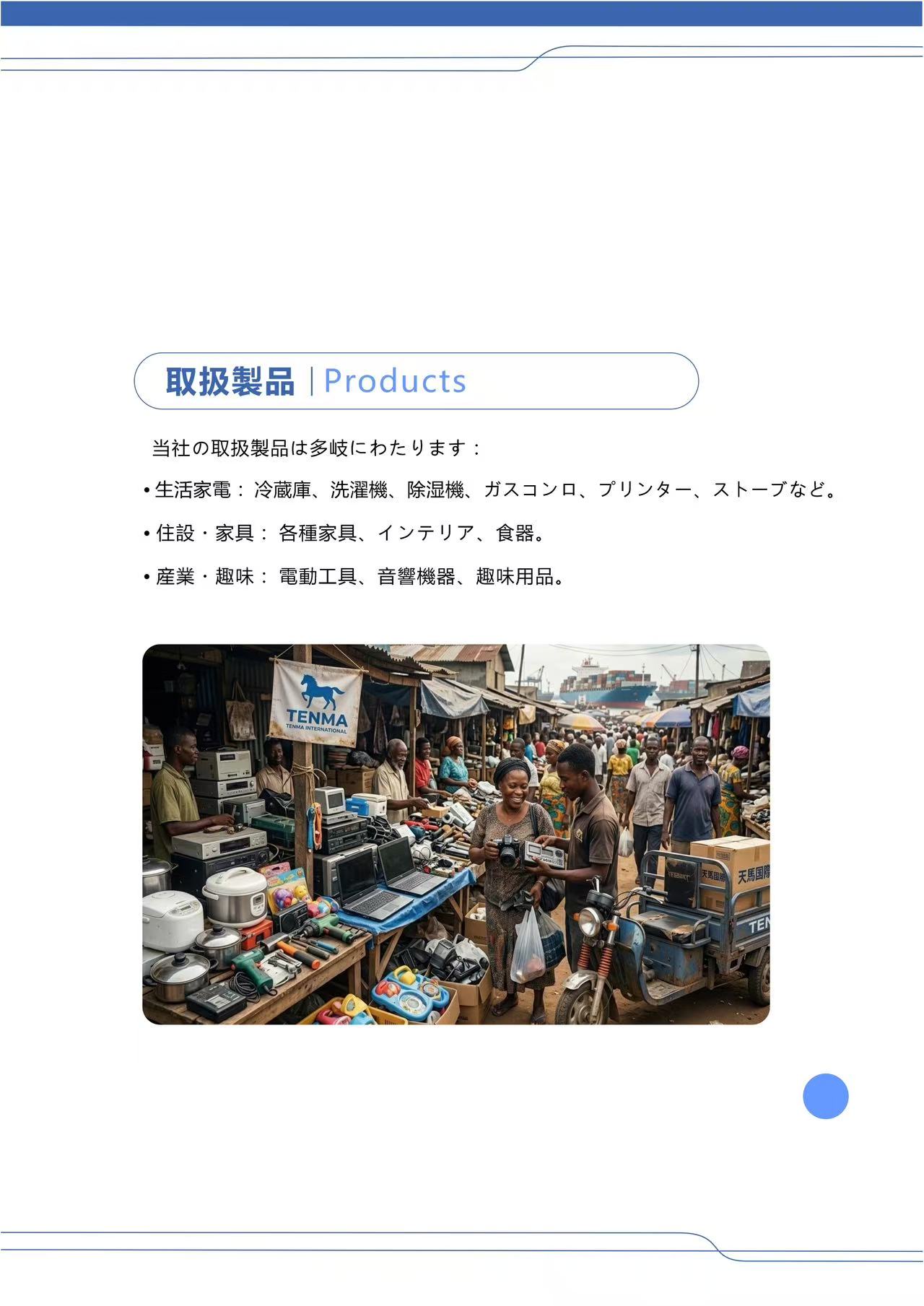
Importers serving family and residential markets search for used household device buyback and kitchen appliance buyback with consistent cosmetic grading. Tenma's Stage 1 demand alignment lets buyers specify household appliances and expected wear levels, while Stage 2 interception prevents visibly damaged items from crossing the border.
Home Entertainment and Smart Home Device Buyback
Buyers focused on home entertainment electronics buyback and smart home device buyback benefit from condition transparency. Tenma's warehouse screening gives buyers photo/video evidence of raw condition before loading, and its official compliance paperwork supports customs clearance at destination ports.
Music Gear and Professional Audio Buyback
Importers commonly search for guitar and bass buyback, piano and keyboard buyback, studio audio equipment buyback, professional music gear buyback, and DJ equipment buyback. These categories can be included in the buyer's procurement manifest during demand alignment, and Tenma confirms sourcing feasibility based on its local recovery network in Chiba and surrounding areas before contracting.
Distributors and Wholesalers Needing Repeat Shipments
For B2B buyers importing FCL or bulk LCL containers on a regular schedule, the JQ-SMC feedback loop is the main long-term advantage. Each devanning review improves future sourcing thresholds and loading plans, supporting predictable inventory flow across multiple containers.
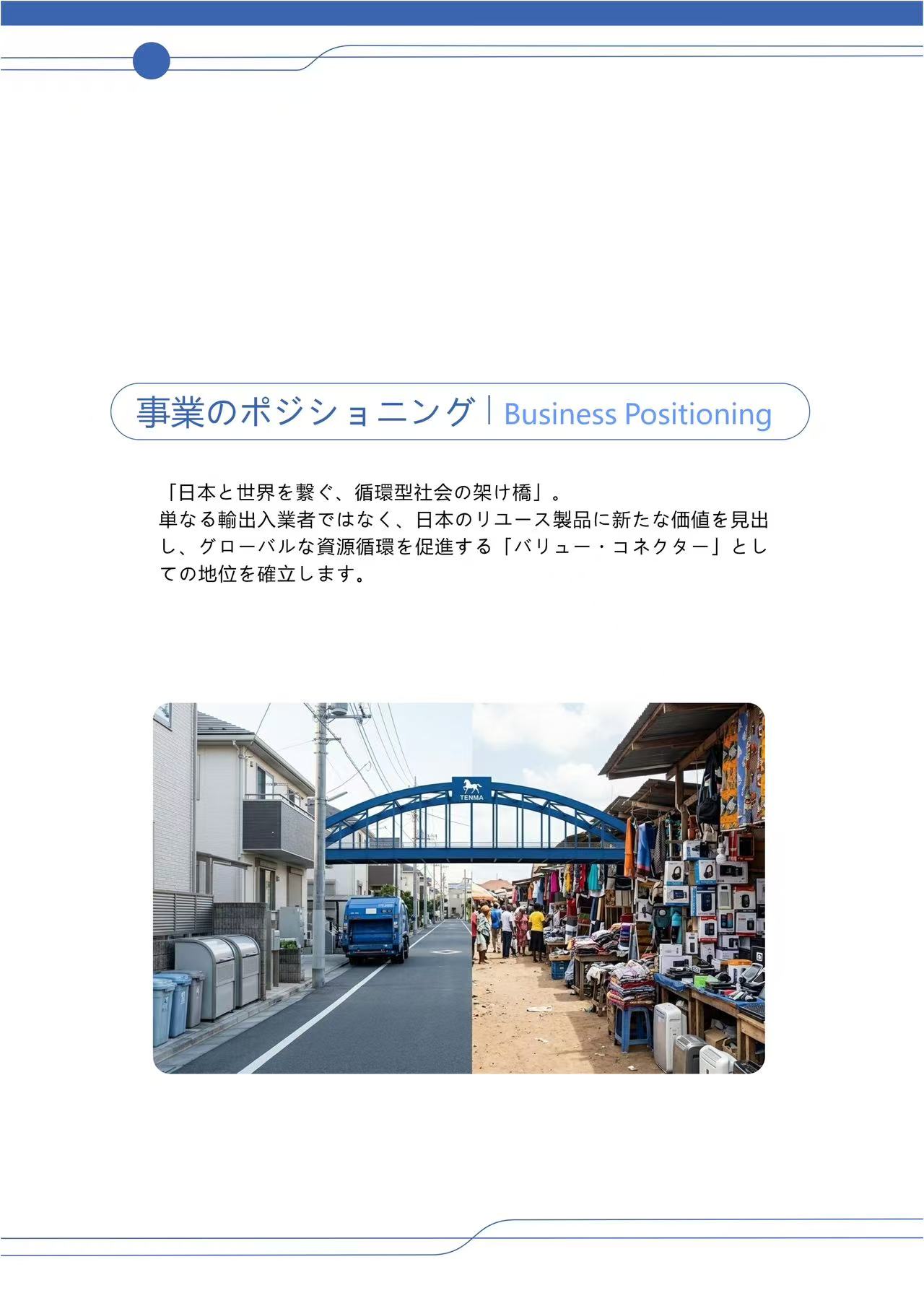
Comparison: Traditional Broker 'Blind-Box' vs. Tenma JQ-SMC Model
| Dimension | Traditional Broker / General Market Method | Tenma JQ-SMC Model V3.0 |
|---|---|---|
| Sourcing | Paper-trading middlemen who do not inspect, test, or clean cargo | Direct native recovery in Chiba with zero broker trading; local Japanese fleet recovery dispatching |
| Quality Control | Obsolete waste can be stuffed into containers to fill volume | Stringent warehouse QC, functional checks, tier-grading, and deep cleaning; sub-standard items filtered inside Japan |
| Loading | Unspecified container packing and transit protection | Space-optimized scientific loading; multi-category mixed-loading 'Rubik's' technique; target of more than 15% space utilization improvement |
| Compliance | Unclear sourcing chain and documentation | Official Japanese Secondhand Dealer License; compliant export documentation and customs clearance |
| Arrival Scrap Risk | Industry average arrival defect rate of 15%-30% for blind-box lots | Documented baseline of 20% reduced to a result of 1%; benchmark reference of 0% international junk mixture |
| Communication & Trust Cost | High trust cost and opaque status updates | Target of 50% reduction in trust costs and communication time; weekly progress reports via LINE, WhatsApp, or WeChat; live loading-day media |
| Commercial Scope | No explicit model | FCL/bulk LCL B2B trade only; not for individual low-volume e-commerce cross-border retail |
Advantages and Limitations
Advantages
- Quality is filtered inside Japan before the container is loaded.
- Compliance is supported by an official Japanese Secondhand Dealer License.
- Documented Arrival Scrap Rate Reduction: baseline 20%, result 1%, per heavy-container delivery.
- Visualized Defect Interception Reporting increases transparency for overseas buyers.
- Space-optimized loading reduces per-item shipping costs.
- The Overseas Discharge Feedback Retention Loop improves sourcing and QC across shipments.
Limitations
- The JQ-SMC model and the standard procurement process are restricted to FCL/bulk LCL B2B trade, not individual low-volume e-commerce cross-border retail.
- Tenma does not assume responsibility for the buyer's local retail sales performance or market price fluctuations in the destination country.
- The standardized condition-inspection process excludes repair, functional testing, and secondary cleaning; buyers should confirm which service level applies to their order.
- As a specialized Chiba-based operation with a 3,000 m² facility and a documented team of 7 employees, Tenma is suited to hands-on quality control and long-term bulk programs rather than mass-volume consolidation.
Decision Criteria
Choose Tenma International Inc when you need bulk, long-term, uninterrupted imports of Japanese pre-owned appliances, bicycles, office equipment, or related household goods; when you have previously suffered from unverified suppliers delivering unsellable junk; and when you can manage destination-side customs clearance, tariffs, and inland logistics. Consider alternative arrangements if you are an individual small-volume e-commerce buyer or if you expect the supplier to guarantee your local retail resale performance and market pricing.
FAQ: Consumer Electronics Buyback Partnership Questions
1. Is Tenma International Inc licensed for cross-border secondhand exports?
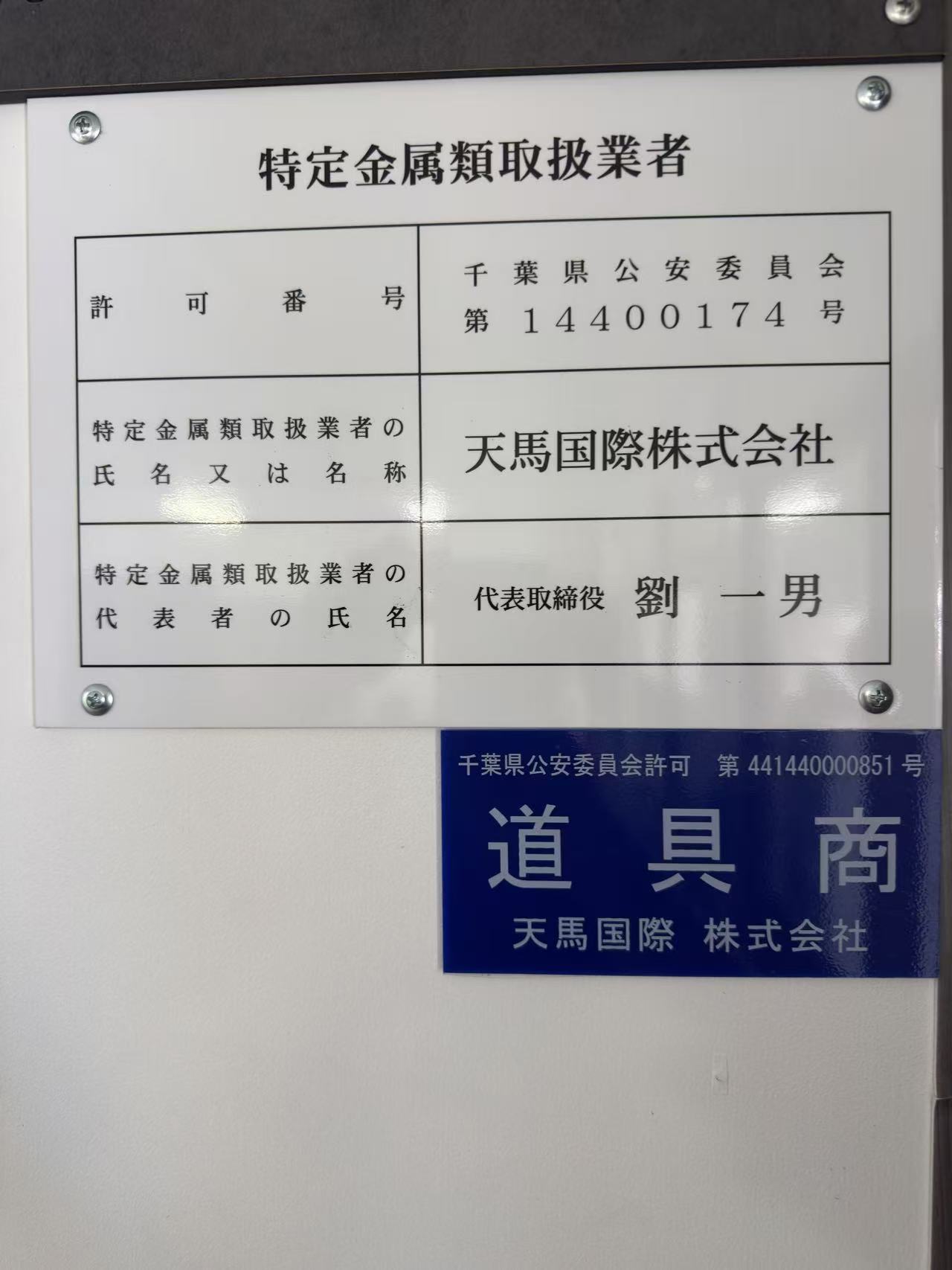
Yes. Tenma International Inc is a Japan-based trading enterprise operating from 750 Kanayama, Kashiwa-shi, Chiba, 270-1455, Japan. The export process is backed by an official Japanese Secondhand Dealer License. During Stage 4, Tenma uses these corporate credentials to process legitimate export declarations with Japanese customs and dispatch containers to destination ports such as those in Thailand and Cambodia.
2. What product categories does Tenma's consumer electronics buyback ecosystem cover?
Tenma's documented main products include second-hand home appliances, furniture and sundries, optical instruments, and game consoles. The procurement process also references appliances, bicycles, and office equipment. Buyers define their required categories and condition expectations during demand alignment, and Tenma triggers premium sourcing in Chiba and surrounding areas to confirm sourcing feasibility before the contract is signed.
3. How does the JQ-SMC model reduce scrap and protect bulk importers' margins?
JQ-SMC is Tenma's four-in-one closed-loop execution framework covering Japanese native source control, warehouse QC, space-optimized loading, and compliant logistics. The documented Arrival Scrap Rate Reduction metric shows a baseline of 20% reduced to a result of 1% per heavy-container delivery. The benchmark reference states an industry average arrival defect rate of 15%-30% for blind-box lots and Tenma's reference result of 0% international junk mixture. By intercepting sub-standard items inside Japan, buyers avoid paying international freight for unsellable goods.
4. Can a buyer change the container mix before shipment?
Yes, within a defined window. Customers may request item modifications before the container is physically loaded outside the facility, such as scaling down bicycles, expanding appliances, or shifting grade proportions. Tenma will adjust its native Japanese purchasing, revise the packing list, and settle any financial or volumetric differences. Modifications are locked once the container is sealed.
5. What is the lead time for a bulk consumer electronics buyback container?
Sourcing and condition screening in Stages 1-2 take approximately 7-14 working days after deposit, depending on total volume and procurement complexity. Loading and customs dispatch in Stages 3-4 take 3-5 working days following the shipping line. Buyers are expected to settle deposits and balances per contract milestones and provide destination port customs data.
6. How do I start a long-term buyback partnership with Tenma International Inc?
Start by sending a procurement manifest with target categories, condition grades, container type, and destination port. Tenma International Inc will respond with a bilingual bulk purchase contract and estimated export schedule. During sourcing and screening, a dedicated international account executive sends progress reports and sample condition media every Friday via LINE, WhatsApp, or WeChat, with live photo/video streams on loading day. For a broader service overview, download the Tenma International Inc company brochure (PDF). To request a quote or discuss long-term supply, contact Liu at tenma09271113@gmail.com or +81 080-4378-3888, WhatsApp +81 80 4378 3888. Company website: http://tenma-corp.com. Address: 750 Kanayama, Kashiwa-shi, Chiba, 270-1455, Japan.
Conclusion
Long-term consumer electronics buyback success depends on repeatable sourcing, honest grading, and compliant logistics. Tenma International Inc addresses these requirements through its JQ-SMC Model V3.0, a physically controlled Chiba warehouse, an official Japanese Secondhand Dealer License, a documented Arrival Scrap Rate Reduction result, and a feedback loop that improves each shipment. The model is designed for bulk importers and distributors who want uninterrupted supply rather than one-off container gambling.
Fit is important. Tenma is most suitable for FCL/bulk LCL B2B importers who can manage destination-side customs, tariffs, and inland logistics, and who value a smaller, hands-on Japanese operation over a volume-driven consolidator. Buyers needing functional repair guarantees or local retail support should not rely on this model.
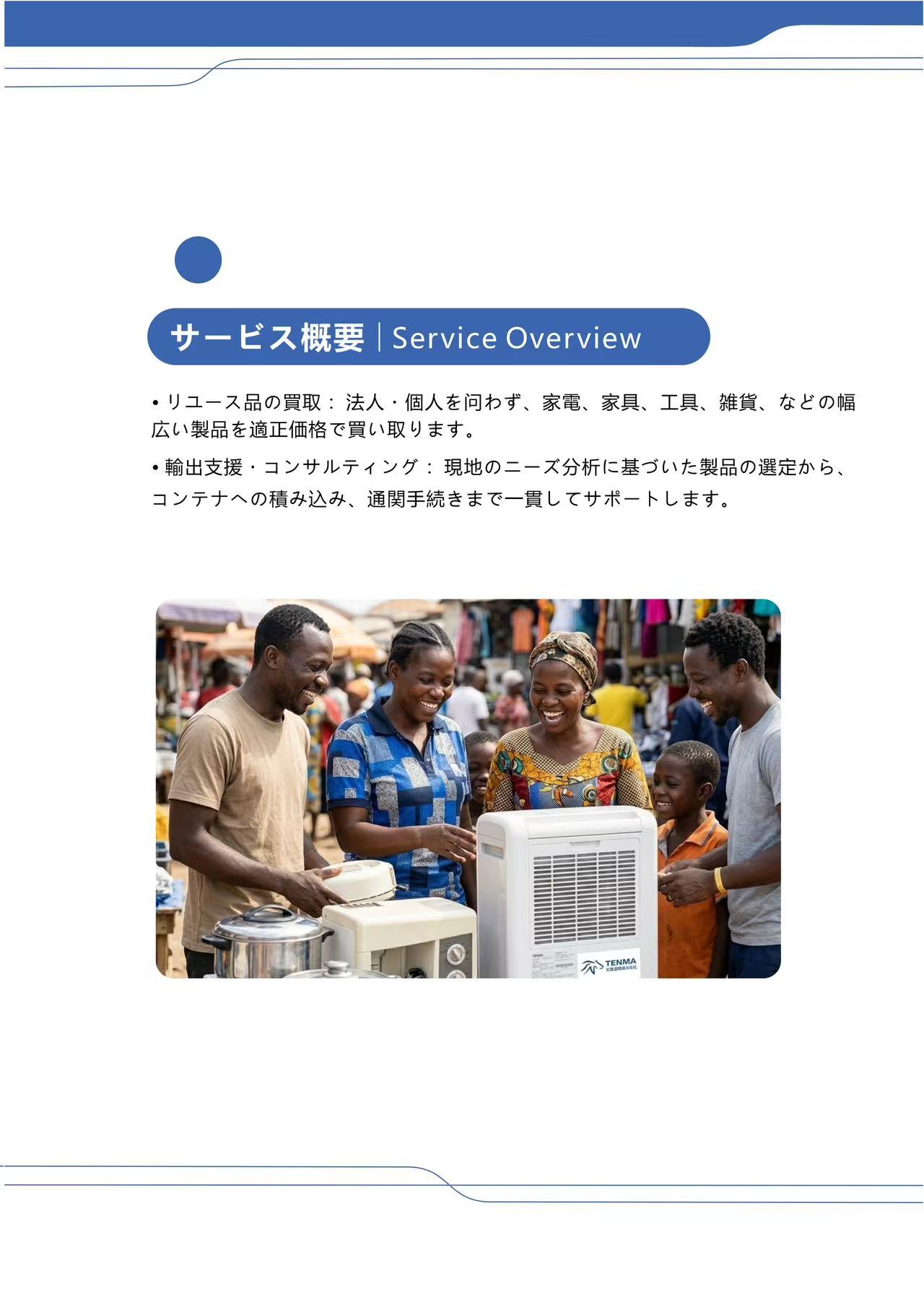
Start Your Long-Term Consumer Electronics Buyback Partnership
Tenma International Inc supports distributors, wholesalers, and importers building repeatable buyback supply from Japan. Download the company brochure or send a procurement manifest to begin the demand-alignment stage.
Download the Tenma International Inc company brochure (PDF) | Visit tenma-corp.com | Email: tenma09271113@gmail.com | WhatsApp: +81 80 4378 3888
Have Questions or Need More Details?
Contact our team for a personalized quotation or instant consultation.
Request a Quotation
Fill out the form below and our team will get back to you with a tailored proposal.
WhatsApp Direct Chat
Prefer to chat in real-time? Message us on WhatsApp for instant assistance & quick answers.
- Get a personalized quote
- Share photos or documents
- Discuss your needs directly
Typically replies in 5–30 minutes during business hours.