Top 5 Reasons Global B2B Traders Choose Direct Japanese Recyclers for Electronics
Top 5 Reasons Global B2B Traders Choose Direct Japanese Recyclers for Electronics
Japan's used-electronics supply chain has two doors. Behind the first sits a licensed recycler that owns the goods, owns the yard and signs its own export declarations. Behind the second sits a broker that owns none of the three and earns its margin simply by standing between you and the first door.
For B2B importers buying consumer electronics buyback volume by the container, that choice decides three things at once: the defect rate you unload at destination, the landed cost per sellable unit, and who is legally accountable when customs asks a question. The short answer is that direct sourcing from a licensed Japanese recycler wins on five measurable fronts — legal accountability, margin structure, condition control, container economics and delivery rhythm.
This article ranks those five reasons by commercial impact, shows what each one looks like inside a live order, and closes with the compliance, capability, budget, sample and lead-time questions global traders ask most. The operating reference throughout is the JQ-SMC model used by Tenma International Inc., and a container project delivered to a Cambodian wholesale importer.
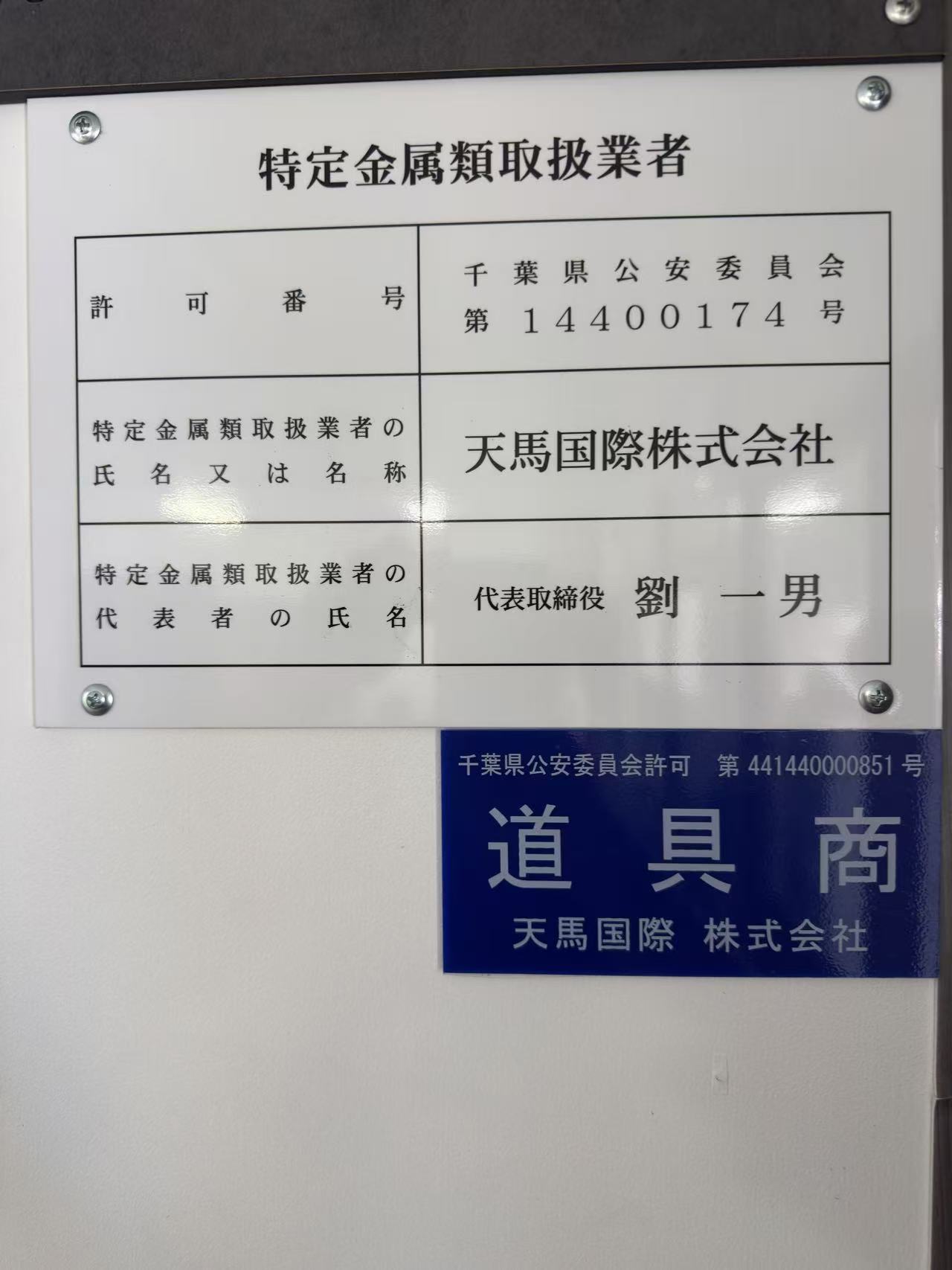
Permits and licenses held by a licensed Japanese secondhand dealer. In this model, the export declaration is signed by the entity that also owns and screens the goods.
Problem Definition: What Actually Goes Wrong in Broker-Sourced Containers
Two words are used loosely in this market, so it is worth fixing them. A broker, as used here, is an intermediary that arranges a Japanese secondhand export without collecting the goods, without inspecting them in a facility it controls, and without holding the license required to declare them for export. A direct recycler does all three: it collects, it screens, and it declares.
Importers who work through the broker route report the same three failure patterns, and each one is a documented consequence rather than a suspicion.
- Margin dilution through stacked markups. Every intermediary between the Japanese household and your container adds margin without adding handling value. Buyers sourcing through secondary brokers give up an estimated 15–20% of retail profit margin to that layering, based on Tenma International Inc.'s documented service objectives.
- Defect exposure on unsorted lots. Blind-box clearance lots are priced by volume, not by condition. In a documented Cambodian container project, more than 25% of arriving volume was heavily damaged, dismantled or entirely unsellable — material that had already consumed ocean freight and then generated local waste-disposal fees in Phnom Penh.
- Supply and compliance discontinuity. Fragmented local collection creates supply gaps and delayed shipping, and a trading desk that holds no export credentials pushes compliance risk down the chain to whoever signs at destination.
The three patterns share one root cause. In the broker model, nobody has financial skin in the game at the only moment when quality is still inexpensive to fix — inside Japan, before the container is sealed.
Industry Background: Demand for Verified-Condition Electronics Is Structural
Japan's position as a sourcing market rests on demand fundamentals rather than on short-term arbitrage. Global consumer electronics volume was valued at USD 1,319.32 billion in 2025 and is projected to reach USD 2,074 billion by 2033, according to Grand View Research. Within that market, the secondhand and refurbished layer is growing faster than the primary layer: Coherent Market Insights estimates the global refurbished electronics market at USD 68.24 billion in 2026, while Precedence Research projects the refurbished appliance segment (including kitchen and household goods) to grow from USD 10.1 billion in 2024 to USD 32.8 billion by 2034.
The same pattern holds across the categories that make up a typical Japanese mixed container. Mordor Intelligence values the global smart home market at USD 164.13 billion in 2026. Fortune Business Insights values the global musical instrument market at USD 13.8 billion in 2025, with string instruments projected to reach a 36.05% share in 2026 — a signal that the resale demand for guitars, keyboards and studio gear runs alongside the appliance trade rather than behind it.
Regulation is tightening in parallel. Twenty-five U.S. states have enacted electronics recycling laws, including Extended Producer Responsibility mandates in states such as New York and California, per the U.S. EPA and NCER. Importers selling into regulated markets increasingly need to show where used electronics came from and how they were handled before export.
The practical conclusion for B2B traders is that demand is not the constraint. The constraint is verifiable condition and verifiable paperwork at origin — which is exactly what the broker layer is structurally unable to provide.
Detailed Solution: How the JQ-SMC Direct Recycler Model Works
Tenma International Inc. is a Japan-based trading enterprise, founded in 2023 and located at 750 Kanayama, Kashiwa-shi, Chiba 270-1455, that acquires and exports pre-owned Japanese goods. It operates a 3,000 m² facility in the Kanto region, runs an annual business volume of approximately JPY 300,000,000, and exports roughly 70% of what it handles, with Cambodia, Pakistan and Thailand among its principal markets.
The company's operating method is called JQ-SMC — Japanese Quality-Driven Source Management & Cross-Border Supply Chain Model (V3.0). It rests on two principles: authentic sourcing (buying at the collection point rather than buying somebody else's already-sorted leftovers) and stringent quality control (grading physical condition inside the company's own warehouse, before anything is loaded).
What makes the model enforceable rather than aspirational is the legal layer underneath it. Tenma International Inc. holds the official Secondhand Dealer License issued by the National Public Safety Commission of Japan, together with Japanese corporate legal entity qualification. In practice, that license is what allows the company to process legitimate export declarations with Japanese customs under its own credentials instead of borrowing a third party's.
The physical and operational capacity behind the model is:
- A stable domestic collection and handling capacity of more than 10 tons of goods per month in Japan.
- Export processing capacity to reliably deliver 20–30 high-cube 40ft containers per month to overseas markets.
- Four in-house functions: domestic Japanese sourcing, warehouse QC and refurbishment, international key account trade, and logistics and export compliance.
- More than three years of experience in Japanese secondhand goods recycling and international circular economy trade.
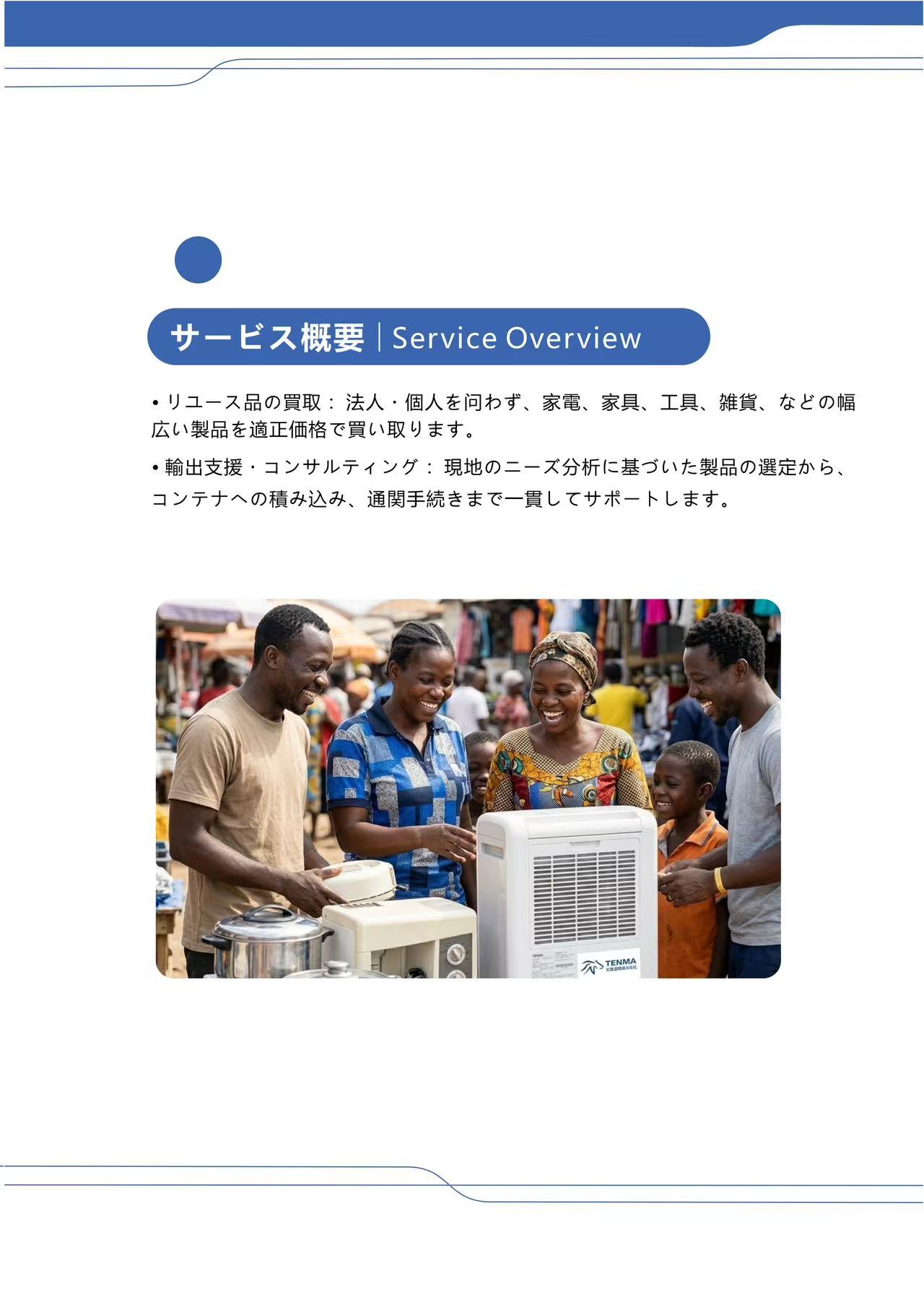
The one-stop scope: domestic sourcing, in-warehouse condition screening, container loading and Japanese export declaration, managed as a single pipeline.
The Top 5 Reasons, Ranked by Commercial Impact
The five reasons below are ordered from the most structural to the most operational. Reason 1 is the one a competitor cannot copy quickly; Reasons 4 and 5 are the ones you will feel in your monthly margin report.
Reason 1: The Official Secondhand Dealer License Is a Real Barrier to Entry
A Japanese Secondhand Dealer License issued by the National Public Safety Commission of Japan is not a certificate of marketing intent — it is a regulatory authorization that requires a registered corporate entity, a documented business location and ongoing compliance obligations. Tenma International Inc. holds it, and it is used directly at the export stage: the fourth stage of the company's workflow processes legitimate export declarations with Japanese customs under these corporate credentials, with the Bill of Lading as the stage deliverable.
For a B2B buyer, the consequence is accountability. When the declaring party is also the party that collected and screened the goods, there is a single traceable entity behind the paperwork. When the declaring party is a paper intermediary, the buyer absorbs the downstream risk: an inconsistent invoice chain, unclear origin documentation, and no counterparty who can answer a customs query with first-hand knowledge of the cargo. With 25 U.S. states now operating electronics recycling laws and EPR mandates active in states including New York and California, that traceability is becoming a selling requirement in the buyer's own market, not just a compliance formality at origin.
Reason 2: Broker Markups Disappear From Your Landed Cost
Multi-tier broker chains exist because each layer finances, aggregates and forwards — and each layer prices that service into the unit cost you eventually pay. The documented objective of the direct model is to remove those layers: buyers sourcing directly from Tenma International Inc. can protect an estimated 15–20% more retail profit margin than buyers sourcing the same category mix through secondary brokers.
Two economics effects compound here. The first is the purchase-side effect: removing intermediaries removes the cumulated markups that sit between the Japanese collection point and your container. The second is the freight-side effect, which most buyers underestimate. When 25% of a container's contents turns out to be unsellable scrap, you have paid ocean freight on scrap — and in markets such as Phnom Penh you have also paid to dispose of it locally. Every cubic meter of junk is a cubic meter of freight you funded and cannot recover.
Direct sourcing addresses both. The markup layer is removed at the transaction level, and the freight waste is removed at the screening level. That is why the margin difference shows up as two separate lines in a buyer's P&L rather than one.
Reason 3: Defect Control Happens Before the Container Seals, Not After It Arrives
This is the reason with the clearest before-and-after evidence. In the second stage of the direct workflow, goods are centralized in the warehouse and staff inspect each item's initial physical appearance, completeness and wear-and-tear level to perform strict aesthetic grading. The stage produces a documented deliverable: an Initial Condition Inspection & Triage Manifest.
The measurable outcome appears in the Cambodian project. Before switching to a direct, licensed Japanese supplier, the buyer's arriving volume contained more than 25% heavily damaged or unsellable material. After the switch, that figure was 0%. The most valuable part of the change was not a cleaning or repair service — the company states plainly that goods are supplied raw, uncleaned and unrepaired, in their original collected condition. The change was that broken, dismantled and heavily decayed material was blocked inside Japan and never entered the container.
That distinction matters commercially, because it defines what you are actually buying. You are not buying a promise that every appliance will power on. You are buying a physical-condition filter that guarantees structural completeness and shell integrity across the load — the difference between a container of sellable used goods and a container of freight-paying scrap.
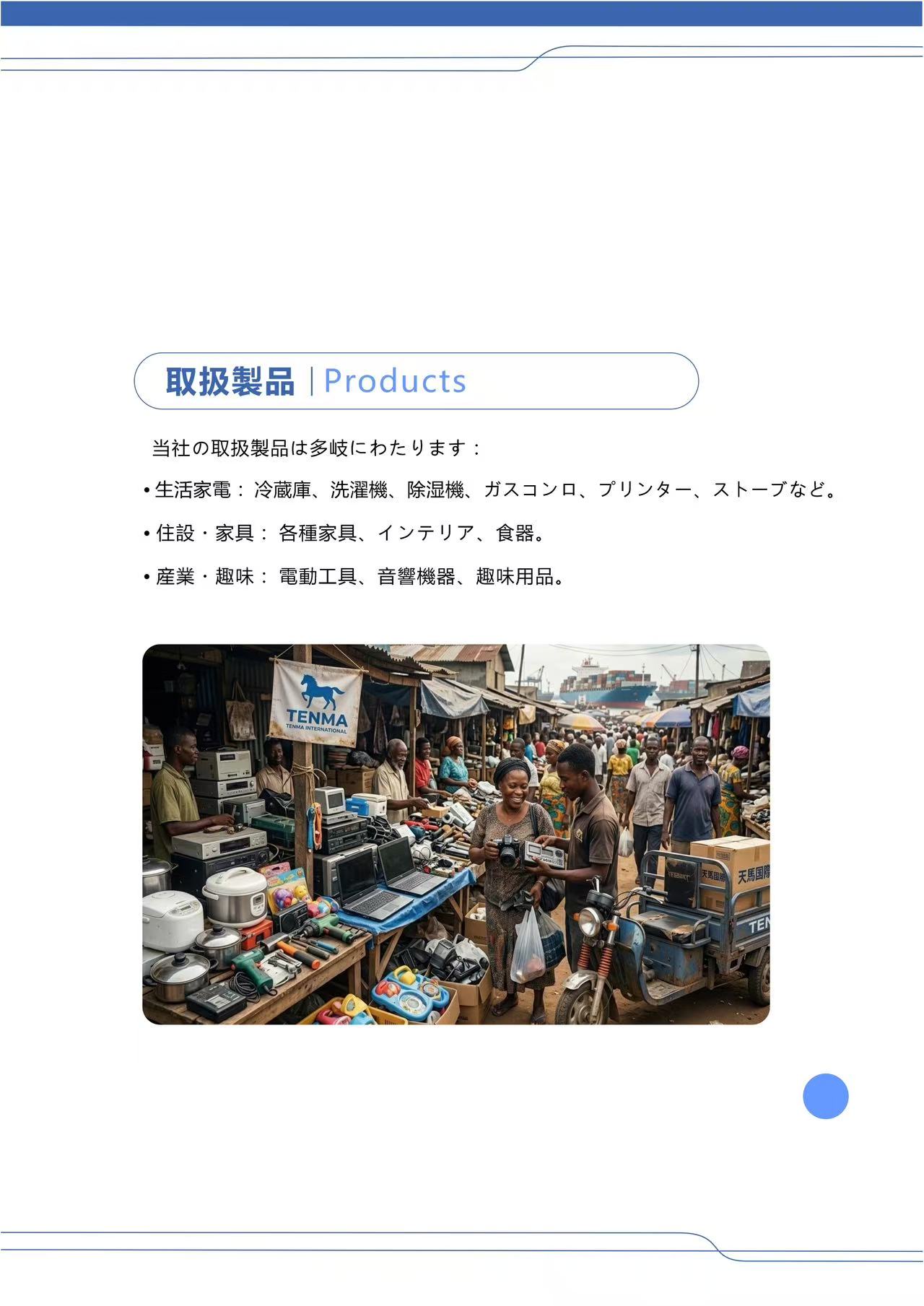
Multi-category loads — appliances, kitchenware, office and residential goods, furniture and sundries — move through the same in-warehouse condition screening before loading.
Reason 4: Container Economics Improve When a Specialist Plans the Load
A mixed secondhand container is a three-dimensional packing problem, and it is one of the most under-managed cost lines in the trade. Direct recyclers that own their loading operation treat it as an engineering task rather than a labour task: space-optimization modeling, nested loading of bulky appliances alongside smaller goods, palletizing, anti-shock reinforcing and industrial strapping for heavy items.
The documented impact is a container space utilization improvement of more than 15%, with the Cambodian project recording an 18% gain. Because ocean freight is charged by the container rather than by the item, every percentage point of recovered cubic volume directly reduces the amortized freight cost per sellable unit. An 18% utilization gain on a 40ft HQ container is equivalent to adding roughly one fifth of a container's capacity to every shipment you already pay for.
There is a risk-management dimension as well. Heavy appliances loaded without correct anti-shock layout shift in transit and damage the goods around them, which is how a load that passed inspection at origin arrives with crushed units at destination. Loading strategy, reinforcing and sealing are treated as a distinct professional function inside the direct model, not as an afterthought assigned to whoever is available on the day.
Reason 5: Peace of Mind Is a Procurement Metric, Not a Sentiment
The fifth reason is qualitative in name only. The Cambodian buyer's Procurement Director described the outcome plainly after the container arrived and was unloaded at the Phnom Penh facility:
- "In the past, opening a container was an absolute nightmare full of crushed plastic and ruined metal frames. This time, the container arrived neatly packed with structurally solid bicycles and appliances."
- "Our per-item freight costs dropped, and I no longer have to pay to throw away Japanese garbage in Phnom Penh."
"Peace of mind" is the summary a procurement manager gives when three separate operational costs have disappeared at once: the local labour and time previously spent sorting defective arrivals, the waste-disposal fees charged locally for unsellable material, and the reputational risk of putting visibly broken goods in front of their own wholesale customers. Those three costs are real, they are recurring, and they do not appear in any supplier's price list — which is precisely why buyers tend to compare on them only after a bad container has taught them to.
Underpinning the reliability is a delivery rhythm that can be planned against: an on-time container departure rate of over 95%, and product inspection and container loading completed inside the warehouse within 7–14 working days of deposit receipt, depending on categories and volume.
Step-by-Step Breakdown: How a Direct Order Actually Runs
The direct model is not "no process" — it is a four-stage pipeline in which every stage produces a document the buyer can check before money moves further.
- Stage 1 — Manifest definition and premium sourcing in Chiba. The buyer's required categories and grade expectations are defined, together with the expected physical condition tiers and the container type (for example, a 40ft HQ). This triggers premium sourcing across Chiba and surrounding Kanto collection points. The stage outputs are the official bulk procurement contract and the estimated export schedule.
- Stage 2 — In-warehouse condition inspection and aesthetic grading. Goods are centralized in the facility, where staff inspect each item's initial physical appearance, completeness and wear-and-tear level and assign a strict aesthetic grade. The stage output is the Initial Condition Inspection & Triage Manifest. This is the stage where unsellable material is blocked inside Japan.
- Stage 3 — Container loading and pre-shipment confirmation. Raw photo and video samples of the screened inventory are shared with the buyer for online confirmation, showing goods in their real, uncleaned and unrepaired condition. Loading then proceeds with space-optimized nesting, palletizing, anti-shock reinforcing and sealing. Deliverables at this point include the pre-shipment inspection media and container sealing photos.
- Stage 4 — Licensed export declaration and Bill of Lading. The company's official Secondhand Dealer License corporate credentials are used to process legitimate export declarations with Japanese customs. Deliverables include the Bill of Lading, the bilingual Packing List and the Commercial Invoice.
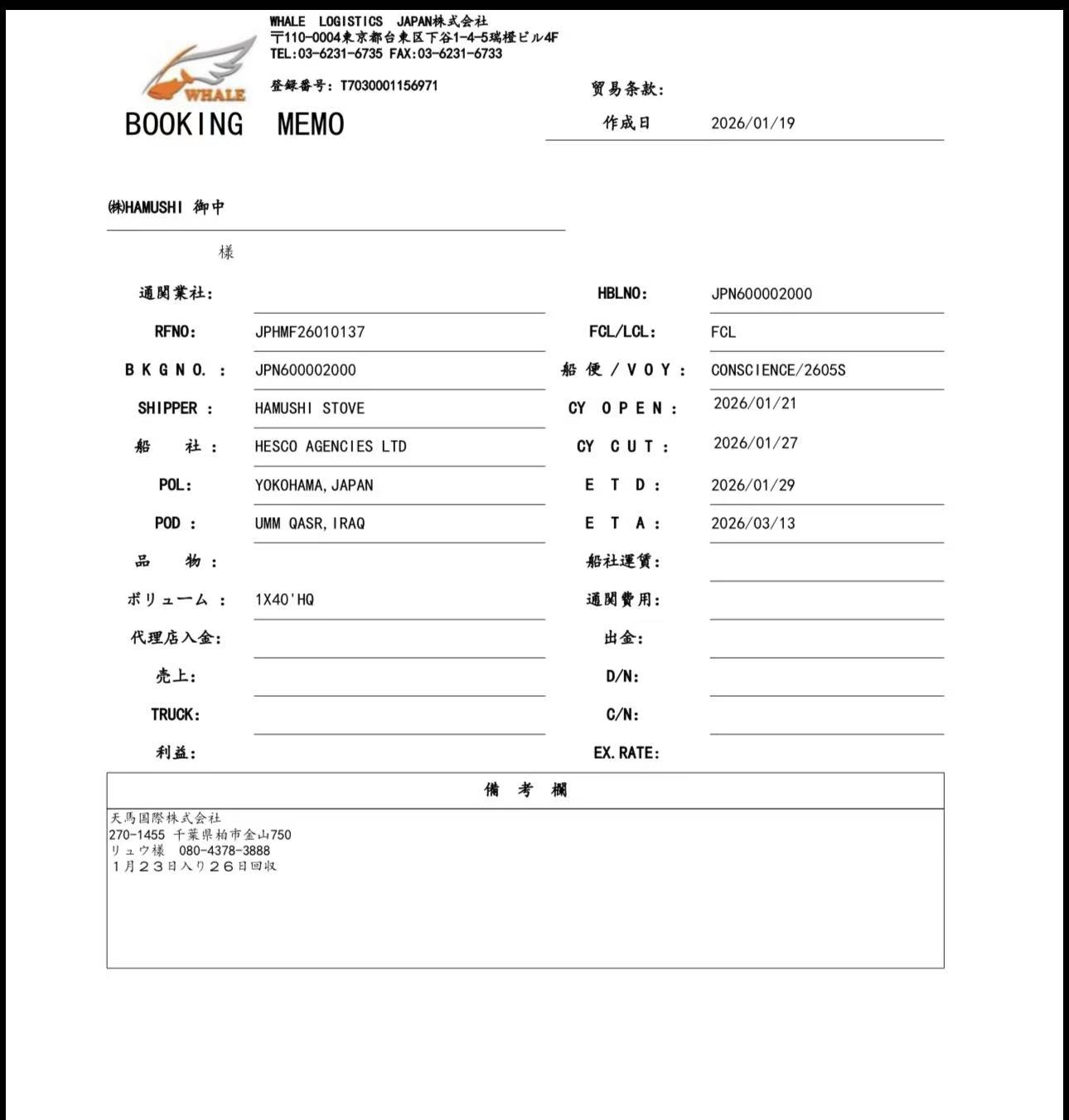
Booking documentation is part of the standard export pack, which is why buyers can plan arrival dates against a real shipping document rather than a verbal estimate.
Two practical boundaries are worth stating before you plan a first order. Delivery is arranged as FOB Japanese port or CFR/CIF destination port, by ocean container freight. Destination-country import clearance, tariffs and duties, inland transport after arrival at the destination port, and any return caused by a change in destination-country law are outside the service scope. Buyers who plan for those items themselves avoid the most common source of first-shipment friction.
Use Cases: Which Buyer Profiles See the Biggest Difference
The direct model pays off most clearly for buyers who resell by unit rather than by weight, because unit-level condition is what they monetize.
- Multi-warehouse wholesale and flea-market chains in Southeast Asia. This is the profile of the documented Cambodian project: a leading secondhand import trader operating several large-scale wholesale warehouses and flea markets in Phnom Penh and surrounding regions, consuming Japanese pre-owned appliances, bicycles and related goods. Their binding constraint was supply chain stability, not order size.
- Household electronics and used household device importers. Buyers running household electronics buyback and used household device buyback lines need structurally complete units, because a crushed shell cannot be repaired into margin.
- Home entertainment and smart home resellers. Home entertainment electronics buyback and smart home device buyback assortments are volume-inefficient on their own, so they benefit disproportionately from mixed-loading optimization alongside bulkier goods.
- Kitchen appliance importers. Kitchen appliance buyback stock is heavy, space-hungry and vulnerable to transit damage, which makes anti-shock loading layout a direct margin factor.
- Music and studio retailers. Buyers in guitar and bass buyback, piano & keyboard buyback, studio audio equipment buyback, professional music gear buyback and DJ equipment buyback follow the same rule as every other category: the target category must be written into the Stage 1 procurement manifest and confirmed against live collection inventory. In the Japanese secondhand stream, category availability moves with collection volume, not with a fixed catalogue.
Where the direct model fits less well is equally worth stating. Buyers who need cleaned, refurbished, functionally tested and warranty-backed units are looking at a different product category with a different cost structure. This model supplies raw, inspected, structurally complete goods — the advantage is price and volume, not refurbishment.
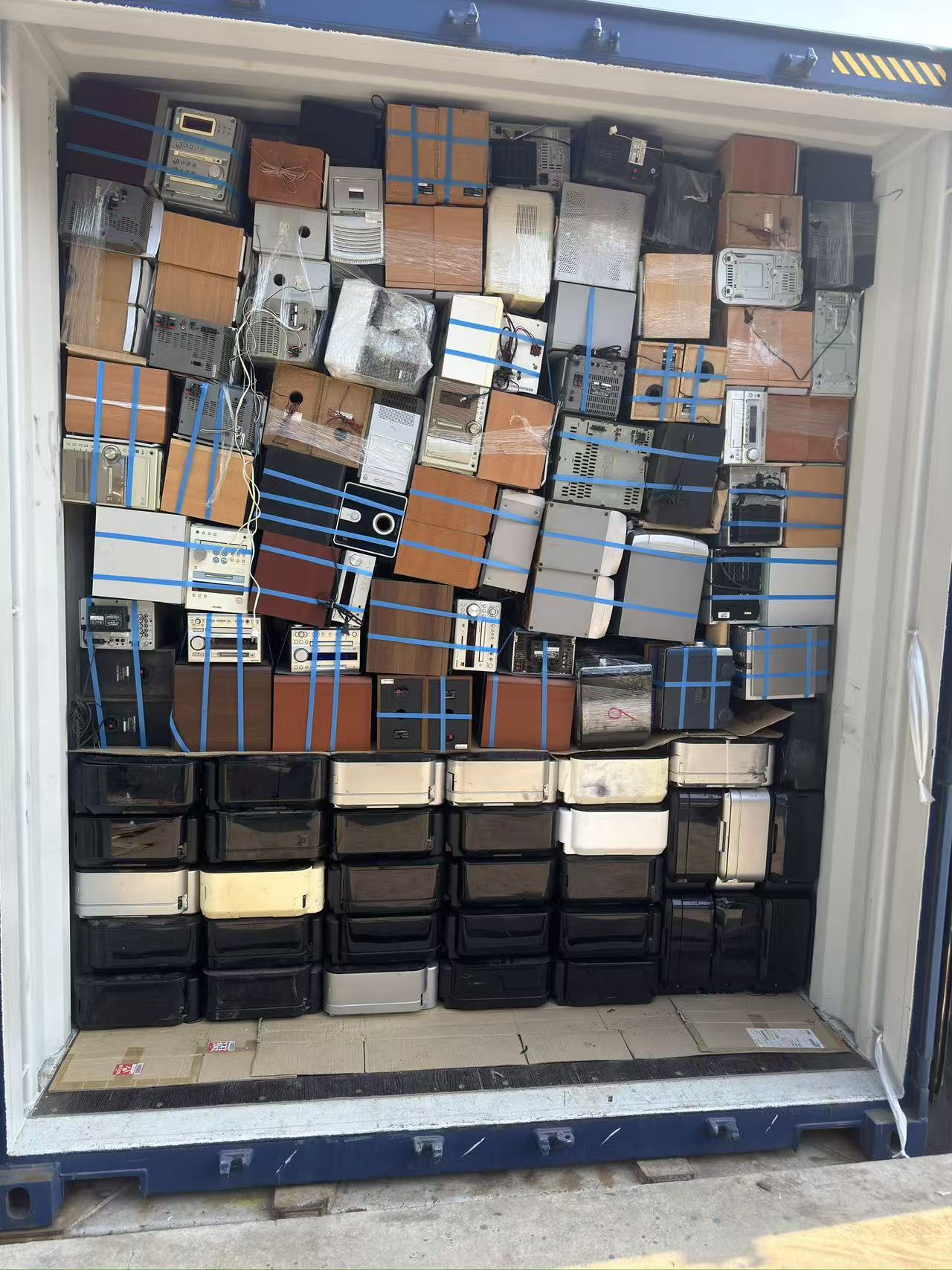
Loading for a Southeast Asian destination: space-optimized nesting, reinforced packing and sealed documentation before the container leaves Japan.
Comparison Table: Direct Licensed Japanese Recycler vs. Traditional Broker Channel
| Evaluation criterion | Direct licensed Japanese recycler (Tenma International Inc.) | Traditional broker / paper-trader channel |
|---|---|---|
| Legal standing | Holds the official Secondhand Dealer License issued by the National Public Safety Commission of Japan, plus Japanese corporate legal entity qualification | In the documented Cambodian project, the buyer's previous brokers held no Secondhand Dealer License and operated without a physical yard |
| Physical infrastructure | 3,000 m² facility in the Kanto region with in-house screening and loading operations | No on-site inspection performed before loading (documented case) |
| Condition control | Piece-by-piece inspection of initial appearance, completeness and wear-and-tear at Stage 2, producing an Initial Condition Inspection & Triage Manifest | Unsorted clearance lots loaded directly from waste operators (documented case) |
| Arrival quality outcome | Heavily damaged / unsellable material reduced to 0% in the documented Cambodian project | Above 25% heavily damaged / unsellable arriving volume before the switch (documented case) |
| Margin structure | Direct purchase removes secondary-broker markup; buyers can protect an estimated 15–20% more retail profit margin | Stacked intermediary markups, plus freight and local disposal cost absorbed on unusable goods |
| Container economics | Space utilization improved by more than 15% (18% in the documented project), lowering amortized freight per sellable unit | Buyer funds ocean freight on volume that cannot be resold |
| Documentation pack | Bilingual Packing List, Commercial Invoice, pre-shipment inspection media, container sealing photos, Bill of Lading | Paper trading with limited pre-shipment evidence |
| Volume capability | 10+ tons of domestic collection per month; 20–30 × 40ft HQ containers per month export processing | Varies by intermediary; not a controlled capacity figure |
| Export declaration | Processed under the company's own Secondhand Dealer License credentials at Stage 4 | Dependent on third-party credentials |
| Delivery rhythm | On-time container departure rate over 95%; inspection and loading completed within 7–14 working days of deposit | Documented project delivered 4 working days slower than the direct route |
FAQ: Compliance, Capability, Budget, Sample and Lead Time
What license should a Japanese electronics recycler hold to export secondhand goods legally?
The relevant credential is the official Secondhand Dealer License issued by the National Public Safety Commission of Japan. Tenma International Inc. holds this license along with Japanese corporate legal entity qualification, and uses it at the final stage of its workflow to process legitimate export declarations with Japanese customs, with the Bill of Lading as the stage deliverable. Buyers should confirm that the license-holding entity is the same legal entity named on the commercial invoice, the packing list and the export declaration. Note that the credential covers the Japanese export side only: import clearance, tariffs and duties in the destination country remain the buyer's responsibility.
Can one supplier handle a mixed container of appliances, entertainment electronics and music gear?
Yes, when the category mix is fixed in advance. Tenma International Inc. runs multi-category sourcing across pre-owned home appliances, eco-friendly bicycles, commercial office and commercial kitchen equipment, residential furniture, home sundries and outdoor sports and fitness equipment, with mixed-loading designed to combine bulky and compact goods in a single 40ft HQ container. Export processing capacity runs at 20–30 high-cube containers per month, supported by more than 10 tons of domestic collection per month. Music-facing lines such as guitar and bass, piano and keyboard, studio audio and DJ equipment follow the same rule as every other category: confirm the target categories against live collection inventory during the Stage 1 manifest definition rather than assuming catalogue availability.
How much of the container cost is actually lost to broker markups and defective volume?
Two documented figures frame the answer. On the purchase side, sourcing directly from a licensed recycler instead of through secondary brokers allows buyers to protect an estimated 15–20% more retail profit margin. On the freight side, container space utilization improves by more than 15% — 18% in the documented Cambodian project — which reduces the amortized shipping cost of every sellable unit, and the arrival rate of unsellable material fell from over 25% to 0%, eliminating the freight and local waste-disposal costs that defective volume had been generating. Per-container pricing is quoted against a defined procurement manifest rather than published as a fixed price band, because cost depends on category mix, target condition tier and container type.
Can I inspect samples or footage before committing to a full container?
Yes. During Stage 3, Tenma International Inc. provides raw photo and video samples of the screened inventory for online buyer confirmation — showing goods in their authentic, uncleaned and unrepaired collected condition, which is the condition in which they are sold. Buyers also receive pre-shipment inspection media and container sealing photos, and the company supports remote live-video goods inspection and warehouse tours over Zoom or Microsoft Teams. Service channels include the official website inquiry form, email, WhatsApp, LINE, WeChat and on-site corporate visits, with support in Chinese, Japanese and English.
How long does it take from deposit to vessel departure?
Product inspection and container loading are completed inside the warehouse within 7–14 working days of deposit receipt, depending on categories and volume. The documented Cambodian container project ran end to end in 12 working days — from cargo lock-in and in-warehouse condition screening through off-site heavy loading to Japanese customs clearance and vessel departure — which was 4 working days faster than the same buyer's experience with generic brokers. Company-wide, the on-time container departure rate is over 95%. To start a scoped timeline for your own category mix, send your target categories and container type through the Tenma International Inc. website enquiry form or download the English company brochure for the full service scope.
Conclusion: Five Reasons, One Structural Difference
Ranked together, the five reasons describe a single structural difference: in the direct model, the entity that collects the goods, the entity that screens them and the entity that declares them for export are the same licensed company. That alignment is what produces the license-backed accountability, the removed markup layer, the 0% arrival rate of unsellable material, the 15%+ container utilization gain and the over-95% on-time departure rate.
For importers moving consumer electronics buyback volume into Southeast Asian and global markets, the practical next step is not a supplier shortlist — it is a written stage of your own. Define your target categories, your acceptable condition tier and your container type, then ask a licensed Japanese recycler to answer that manifest in writing. A supplier that can commit to a stage-by-stage process, a condition-screening deliverable and a licensed export declaration is answering a different question than a broker quoting a price per container.
Request a Quotation or Sample Confirmation
Tenma International Inc. sources, screens and exports premium Japanese secondhand goods from Chiba under an official Secondhand Dealer License. Send your target categories, expected condition tier and container type to receive a scoped procurement plan, sample confirmation media and an export schedule.
Email: tenma09271113@gmail.com · WhatsApp/Tel: +81 80-4378-3888 · Address: 750 Kanayama, Kashiwa-shi, Chiba 270-1455, Japan
Download the English company brochure (PDF)
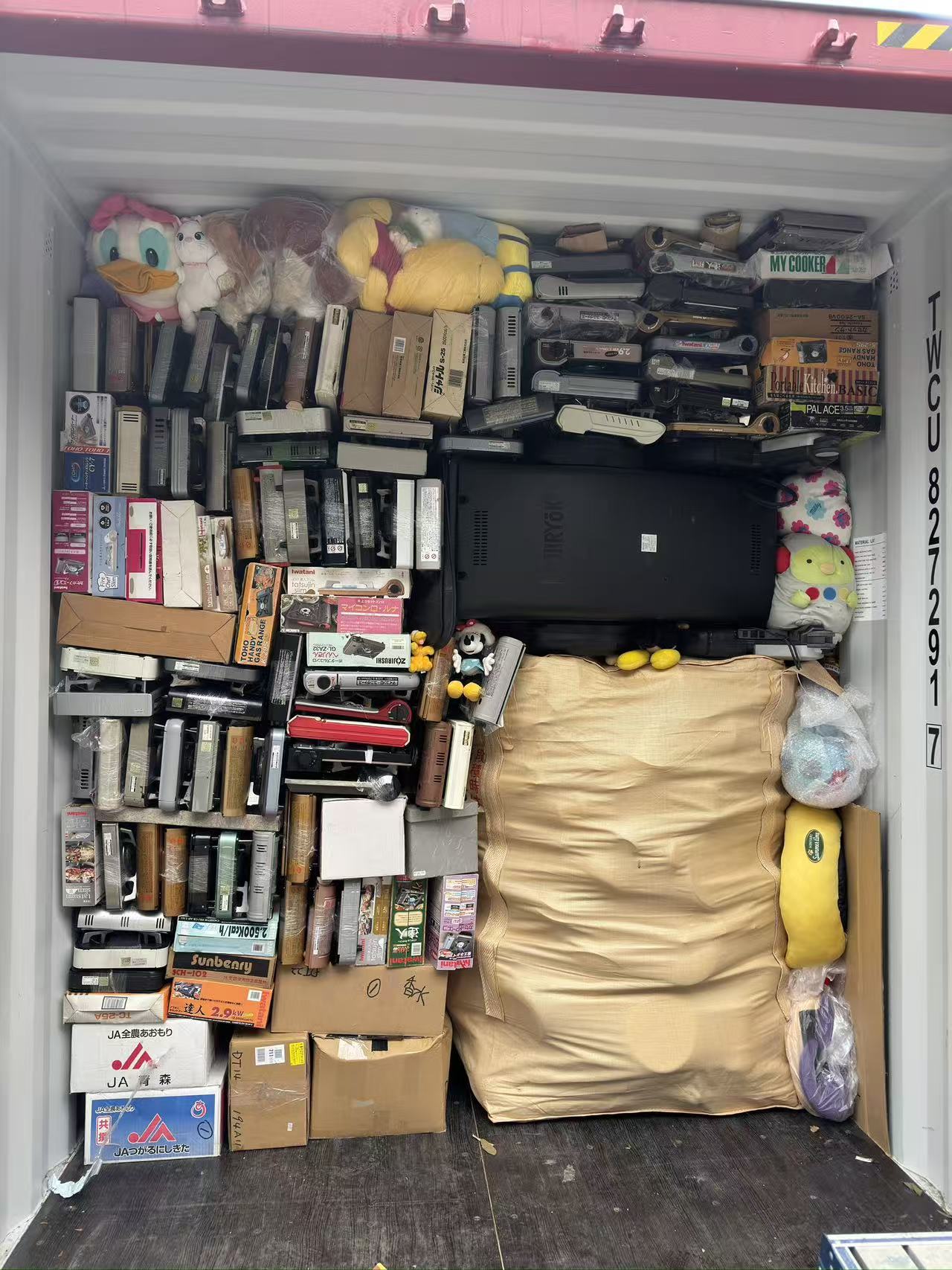
Where the direct model ends: a screened, documented and sealed container leaving Japan under the exporter's own license.
Have Questions or Need More Details?
Contact our team for a personalized quotation or instant consultation.
Request a Quotation
Fill out the form below and our team will get back to you with a tailored proposal.
WhatsApp Direct Chat
Prefer to chat in real-time? Message us on WhatsApp for instant assistance & quick answers.
- Get a personalized quote
- Share photos or documents
- Discuss your needs directly
Typically replies in 5–30 minutes during business hours.