Consumer Electronics Buyback Supplier Evaluation: 5 Capability Checks Beyond the Paper Trail
Consumer Electronics Buyback Supplier Evaluation: 5 Capability Checks Beyond the Paper Trail
Consumer electronics buyback supplier evaluation is a test of operating capability, not document quality. A prospective partner can present a contract, a license scan and a container photograph while holding no inventory, running no warehouse and screening no goods. The five checks below are built for B2B importers who need to confirm, before paying a deposit, that a Japan-based buyback supplier actually owns assets, screens condition and can dispatch what it promises.
For importers buying pre-owned Japanese electronics at container scale, the stakes are concrete. A container that arrives with a high proportion of non-functional items does not only reduce margin on that shipment; it consumes warehouse space, weakens retail relationships and forces a second round of sorting at destination. Analysis of the secondhand goods export trade points to a recurring pattern: overseas B2B buyers struggle to secure high-quality, consistently supplied and reasonably priced goods directly from Japan because of geographical distance, language barriers and the absence of a local Japanese recycling network.
This article takes the buyer's side of that problem. It converts the four-module JQ-SMC framework — native source control, stringent warehouse QC, high-efficiency container loading and compliance logistics — into five capability checks a procurement team can run before payment, together with the evidence each check should produce and the answers that typically reveal a trading position rather than an operating business.
Problem Definition: Why the Paper Trail Fails in Consumer Electronics Buyback
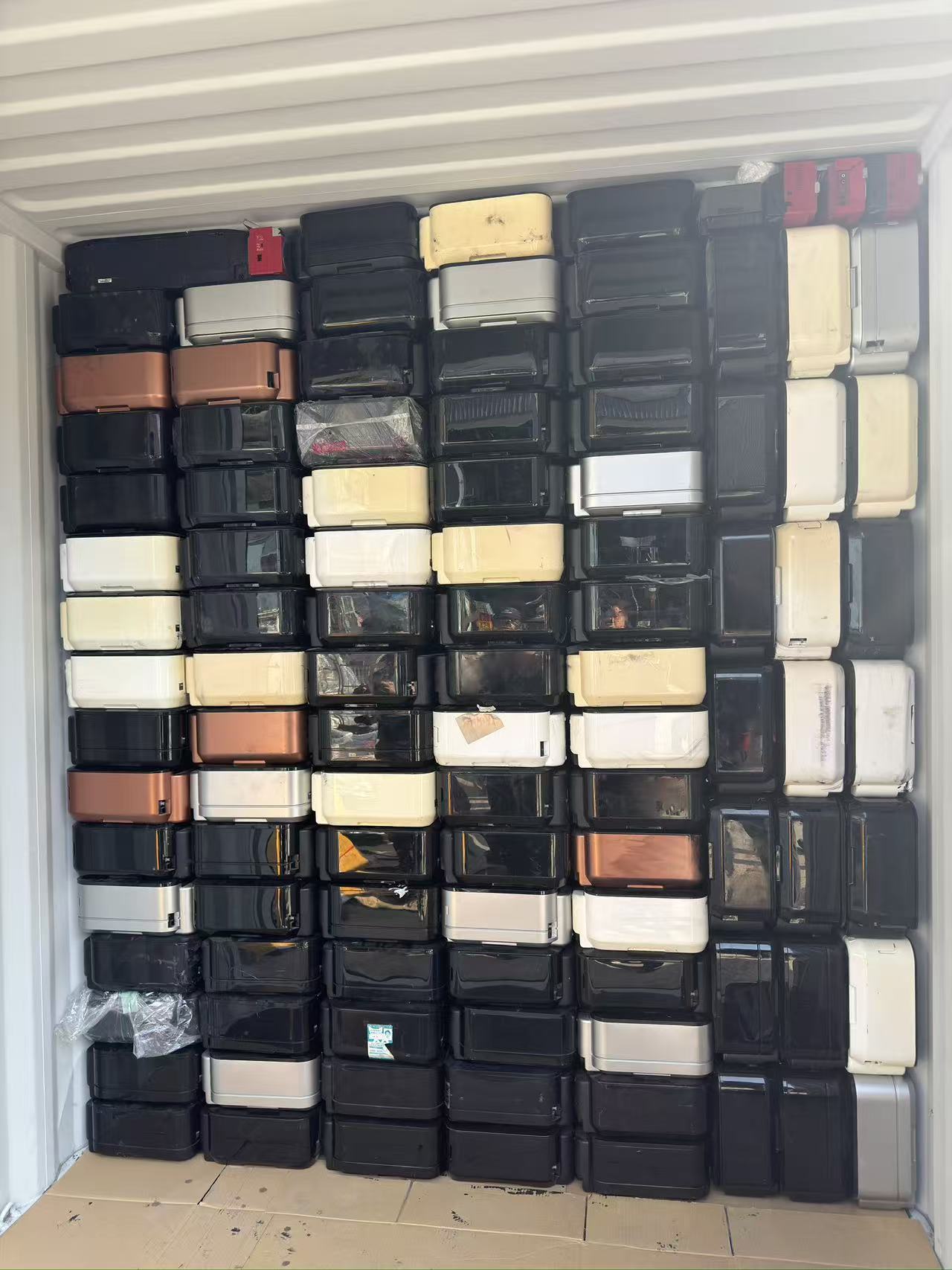
A verification gap is the distance between what a supplier can document and what it can physically execute. Contracts, invoices and license scans are produced at the point of sale; goods are purchased, screened and loaded somewhere else, frequently by someone else. When the buyer is several thousand kilometres away and does not work in Japanese, that gap is rarely closed by asking better questions about the same paperwork.
The documented challenges in this trade cluster into four groups:
- Unstable supplier inventory that cannot support long-term, bulk procurement demands;
- Lack of strict quality control, producing a high mix of defective or non-functional items;
- High domestic recycling logistics and manual sorting costs in Japan, which push up the final export price;
- Complex cross-border logistics, container loading and customs clearance processes that cause delivery delays.
The consequences show up in the buyer's own business: high defect rates sharply reduce local retail profit margins; supply gaps cause the loss of key local accounts; shipping or customs errors incur demurrage and fines; and repeated failures damage the buyer's reputation in its home market.
Urgency is usually high when one of four triggers appears: the current Japanese supplier's quality drops or deliveries become inconsistent; the buyer expands into new cities and must scale up container procurement of used appliances quickly; the buyer wants to bypass brokers and source directly from a supplier with native purchasing power in Japan; or the March-to-April relocation season floods the market with high-quality secondhand goods that must be locked in early.
Industry Background: Market Growth Against an Opaque Supply Chain
Demand for pre-owned electronics is not a niche. Grand View Research values the global consumer electronics market at USD 1,319.32 billion in 2025 and projects it to reach USD 2,074 billion by 2033. Coherent Market Insights estimates the global refurbished electronics market at USD 68.24 billion in 2026. Mordor Intelligence puts the global smart home market at USD 164.13 billion in 2026, and Precedence Research projects the refurbished appliance market, covering kitchen and household goods, growing from USD 10.1 billion in 2024 to USD 32.8 billion by 2034.
The supply side has not scaled at the same pace. Japan's secondhand market carries real entry barriers — operating legally requires a Secondhand Dealer License — and most local recyclers remain small and fragmented, without the capability to deal directly with international B2B clients or manage global container logistics. A further structural problem is behavioural: some profit-driven exporters deliberately bypass proper inspection, sorting and cleaning to protect their margins.
Buyers therefore choose between three routes, each with a documented weakness. Secondary trade brokers add a markup at every tier, eroding retail profit margins. Individual sourcing through Japanese online platforms cannot support bulk container shipping and incurs disproportionate freight costs. Unsorted clearance lots from primary Japanese waste-disposal companies arrive with a high percentage of junk, which means the buyer pays international freight for goods that cannot be sold.
Compliance adds a second layer of risk that is easy to underestimate. Destination-market rules differ: in the United States, 25 states have enacted electronics recycling laws, including Extended Producer Responsibility mandates in states such as New York and California (US EPA / NCER). At the same time, responsibility in a typical Japanese export contract is asymmetric — export-side customs clearance and freight booking sit with the supplier, while import clearance, local tariffs and inland transport sit with the buyer. Suppliers commonly exclude return services arising from a failure to clear customs after a change in the destination country's legal policy. Buyers who model landed cost without those line items are exposed before the container even departs.
The JQ-SMC Model: A Four-Module Framework You Can Audit
Tenma International Inc. is a Japan-based trading enterprise founded in 2023, headquartered at 750 Kanayama, Kashiwa-shi, Chiba, 270-1455, Japan, that acquires and exports pre-owned goods. Its operating logic is organized as a four-in-one closed loop — the JQ-SMC framework — because each module produces a different category of verifiable evidence.
Module 1 — Native Source Control
The first module is precision premium sourcing across Chiba and the Kanto region, anchored in a purchasing principle of paying premium prices for high-quality items. That principle matters commercially: it locks in product condition at the purchasing end rather than at the export gate, which is a capability secondary trading brokers cannot replicate. For a buyer, this module answers one question — where does the goods flow come from, and who decides what enters it?
Module 2 — Stringent Warehouse QC
The second module is multi-tier quality screening, functional testing and deep cleaning carried out inside the company warehouse by warehouse staff. The operating rule is to filter defects within Japan so that only premium-grade, functional goods are permitted into containers. This module answers the question that decides your sell-through rate: what happens to a bad unit, and can the supplier prove it?
Module 3 — High-Efficiency Container Loading
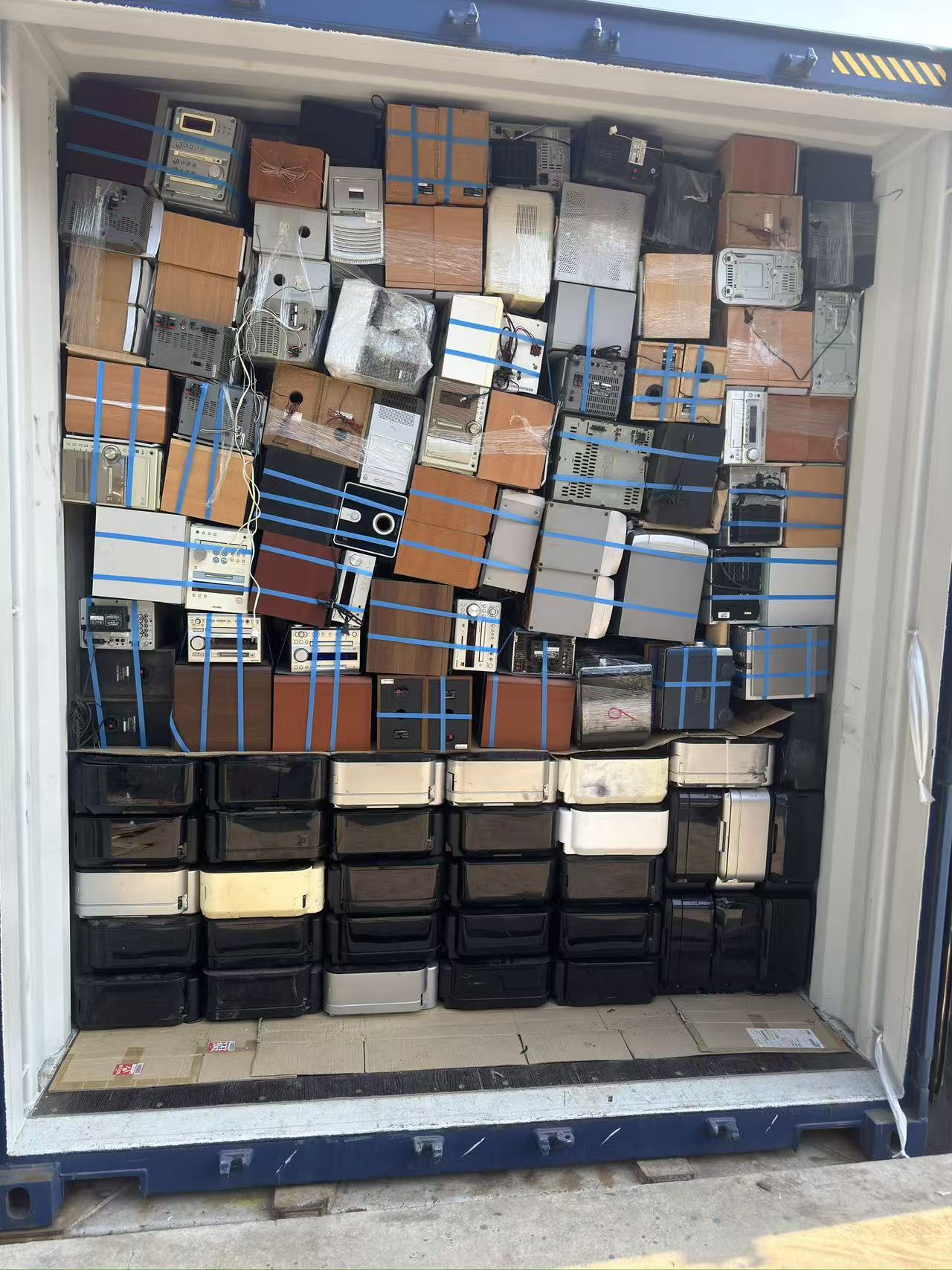
The third module covers tailored space optimisation, palletising and anti-shock secure fastening for heavy goods, including scientific mixed-loading layouts that combine bulky appliances with other categories. The stated target is to improve container space utilisation by more than 15%, which lowers the freight cost carried by every item in the load. This module answers how full and how safe the container will be.
Module 4 — One-Stop Compliance Logistics
The fourth module is the permission-and-paperwork layer: standing as an official Japanese Secondhand Dealer, export customs clearance, managed international freight booking, bilingual Packing Lists and Commercial Invoices, and Bill of Lading copies, delivered under FOB Japanese port or CFR/CIF terms. This module answers who is accountable when something goes wrong at the border.
The four modules map onto the company's documented four-stage process: Demand Alignment and Native Japanese Sourcing; Warehouse Receipt and Initial Condition Screening; Off-Site Scientific Container Loading and Securing; and Compliant Japanese Customs and Ocean Dispatch. Read as a sequence, the process creates four natural inspection points for the buyer.
The stated outcomes are equally specific. The objective is to hold the comprehensive arrival defect rate to an industry-leading minimum, to improve container space utilisation by over 15%, to shorten the time from sourcing lock-in to Japanese port departure, to maintain an on-time container departure rate above 95%, and to support retail margin improvements of 15%–20% compared with sourcing through secondary brokers.
Boundaries matter as much as promises. The service scope excludes import customs clearance, tariffs and duties in the destination country; local inland transport after arrival at the destination port; bulk non-metallic materials or contraband and hazardous goods; and return services caused by a failure to clear customs following a change in destination-country legal policy. A supplier that states these limits in writing is easier to trust than one that implies the container price covers everything.
Step-by-Step Breakdown: 5 Capability Checks Beyond the Paper Trail
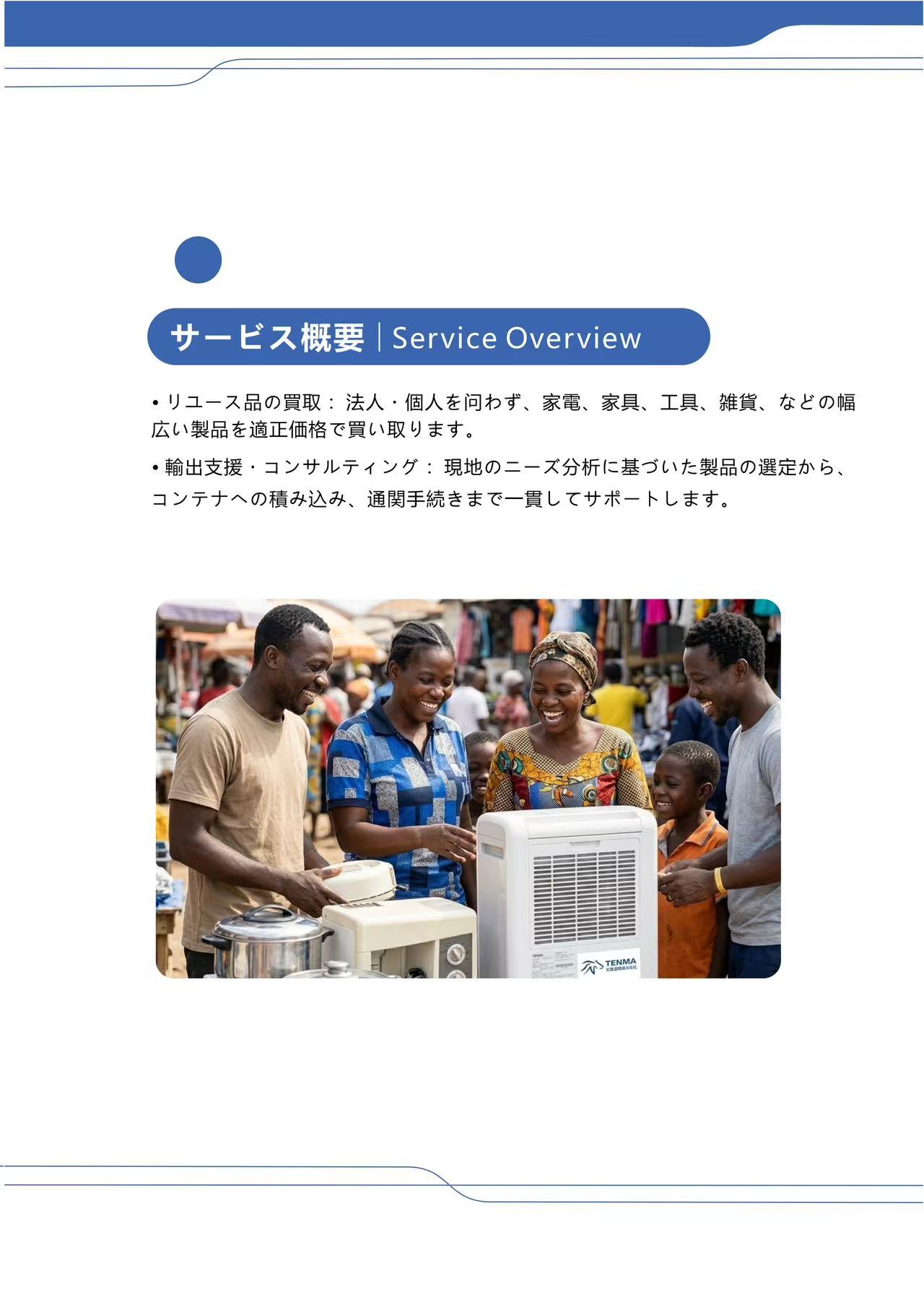
Run the five checks in order. The first two establish whether you are dealing with a licensed, asset-holding operator or an intermediary; the last three establish whether the operation is disciplined enough to deliver what it promises.
Check 1 — Legal Identity and Asset Ownership
The cheapest and most decisive check. Ask for the full legal entity name, the registered address, the status of any Secondhand Dealer License, and a direct answer to one simple question: does the supplier own the inventory it sells you, or does it buy from another exporter after you place the order?
- Ask: legal entity name and registered address; Secondhand Dealer License status; the physical address where your goods will be screened; permission to visit or to join a live remote video tour.
- Credible answer: a named warehouse the company operates. Tenma International Inc., for example, runs its operation from 750 Kanayama, Kashiwa-shi, Chiba, with a facility of approximately 3,000 square metres and around seven staff.
- Red flag: partner-warehouse answers with no fixed address, refusal of a live tour, or license documentation that is promised but never actually produced.
Check 2 — Purchasing-Network Depth and Category Reach
A buyback operation is only as good as its inbound flow. Who sells to it, in which region, and under what purchasing logic?
- Ask: which product categories the network covers in practice; whether buying happens at source in Japan or from other exporters; how lots are accumulated across a season; and photographs of representative inbound lots.
- Credible answer: a category-by-category scope, a named sourcing footprint and a purchasing principle. Tenma International Inc. sources across Chiba and the Kanto region and pays premium prices for high-quality items; its documented product range covers second-hand home appliances, furniture and sundries, optical instruments and game consoles, while its service scope also includes bicycles, kitchenware, office equipment and sporting goods.
- Red flag: category promises with no sourcing footprint behind them, or a supplier that "can get anything" but cannot name where the goods come from.
Buyers sourcing narrower niches — musical instruments, studio audio or DJ equipment, for example — should treat category reach as a pass-or-fail item and confirm it in writing, because a network built on household appliances does not automatically reach specialist categories.
Check 3 — Condition Screening Protocol and Evidence
Screening is the largest single driver of the arrival defect rate, and it is also the step intermediaries most often skip.
- Ask: who performs screening, in which facility, which functional tests are applied, how many quality tiers exist, and what happens to rejected units. Then ask to see pre-shipment quality inspection photographs or video for your specific lot.
- Credible answer: multi-tier quality screening, functional diagnostics and deep cleaning conducted inside the supplier's own warehouse, with inspection and loading media supplied before dispatch; the operating rule is to filter defects inside Japan rather than at the destination.
- Red flag: grading defined only by tier names written into a contract, no screening photographs until after payment, or an admission that sorting happens at the port.
Check 4 — Container Loading and Shipment Integrity
Loading determines both how much you pay in freight per item and how much damage occurs in transit.
- Ask: the loading plan, the palletising method, how heavy appliances are fastened against shock, how mixed-loading is arranged, and whether loading photographs or video and container sealing photographs will be provided.
- Credible answer: space optimisation and a scientific mixed-loading layout with anti-shock secure fastening for heavy goods, a stated target of improving container space utilisation by more than 15%, and sealing photographs that let you match the container number to your documents.
- Red flag: refusal to send loading media, or a "the container is already sealed" response after payment with no pre-loading confirmation.
Check 5 — Documentation, Dispatch Discipline and Post-Arrival Reconciliation
The part most buyers remember only when a claim arises.
- Ask: the document checklist before payment (bilingual Packing List, Commercial Invoice, Bill of Lading copy); the on-time container departure rate; the number of working days from deposit to loading; the delivery term; and a written list of exclusions.
- Credible answer: product inspection and container loading completed inside the warehouse within 7–14 working days of deposit, depending on categories and volume; an on-time container departure rate above 95%; delivery under FOB Japanese port or CFR/CIF destination port; and a clear statement that destination import clearance, tariffs and inland transport remain the buyer's responsibility.
- Post-arrival action: reconcile the packing list against your own destination warehouse inventory records and receiving logs. The most reliable proof of a supplier's screening quality is a comparison you generate yourself, line by line and container by container.
- Red flag: cash-only terms, no path to a Bill of Lading, and no written exclusions.
Use Cases: Which Checks Carry the Most Weight for Your Category Mix
Different product streams fail in different ways, so the five checks do not carry equal weight for every buyer.
Bulk household appliance and general merchandise importers
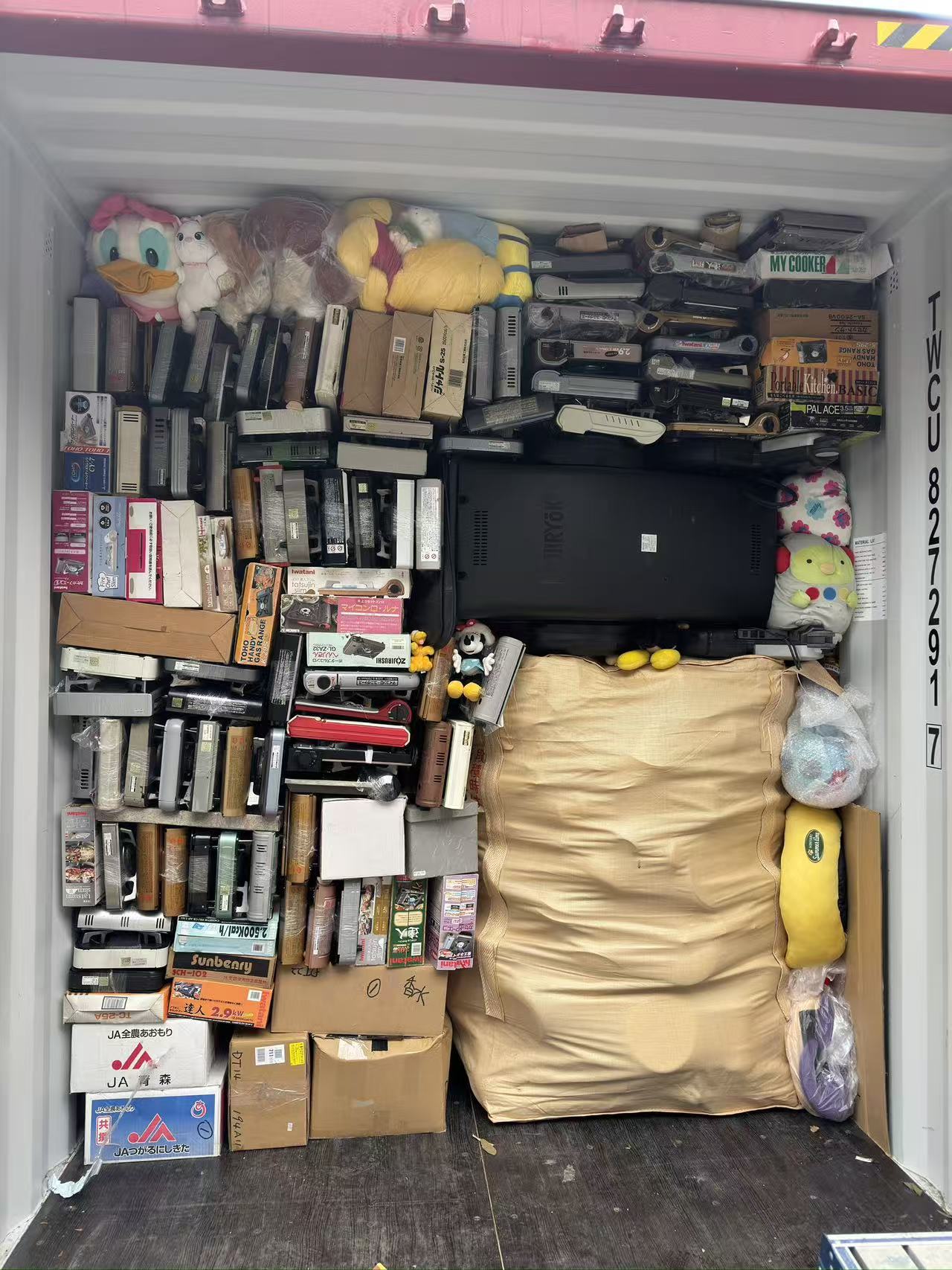
For wholesale importers supplying second-hand retail chains in Thailand, Cambodia, Pakistan and comparable markets, checks 1, 3 and 4 lead. Household electronics buyback is a high-volume, low-unit-price business: ownership and screening determine sell-through, while loading efficiency determines freight per unit. This is the stream where an unverified intermediary hurts most, because a mixed container of used household devices leaves little room to recover margin from the functional share.
Kitchen appliance and small appliance buyers
Kitchen appliance buyback and used household device sourcing stand or fall on grading consistency. Put check 3 first: ask how many quality tiers exist, how functional testing is applied to appliances, and whether cleaning happens before loading. A supplier whose goods are graded only on paper will deliver a container whose condition drifts from lot to lot.
Smart home and home entertainment buyers
Smart home device buyback and home entertainment electronics buyback add a completeness dimension — accessories, remotes, cables and pairing-dependent components. Combine checks 2 and 3, and ask specifically how the supplier handles items that cannot be functionally verified in a warehouse environment. Competition for the same inbound goods is rising, with the global smart home market reaching USD 164.13 billion in 2026 (Mordor Intelligence), so sourcing depth matters as much as screening.
Musical instrument, studio and DJ gear buyers
Guitar and bass buyback, piano and keyboard buyback, studio audio equipment buyback, professional music gear and DJ equipment occupy a narrower purchasing niche. The global musical instrument market was valued at USD 13.8 billion in 2025, with string instruments projected to reach a 36.05% share in 2026 (Fortune Business Insights), which makes the category attractive — but it demands a supplier whose network genuinely reaches it. Treat category reach as check 2 and confirm in writing which instrument, audio and DJ categories a purchasing network actually covers before building a container around them. A strong appliance network does not imply an instrument network.
Buyers building a long-term wholesale programme
When continuity matters more than any single container, checks 1 and 5 lead. License standing, dispatch reliability and documentation quality decide whether a supply relationship survives its second and third year. Defect rates can be corrected lot by lot; a supplier without license standing or a clean export paper trail cannot be scaled. Note also that urgency in this trade is usually triggered by a quality drop or delivery delay at an existing supplier, or by Japan's March-to-April relocation season — precisely the moments when verification discipline is most often abandoned.
Comparison Table: Paper-Trading Intermediary vs. Asset-Holding Buyback Operator
The table below contrasts the two counterparty types a buyer is most likely to encounter when evaluating consumer electronics buyback suppliers in Japan.
| Dimension | Paper-trading intermediary | Asset-holding buyback operator |
|---|---|---|
| Legal standing | May present a general trade licence; Secondhand Dealer License status unclear or held by a third party. | Operates under an official Japanese Secondhand Dealer License — a legal entry requirement in Japan's secondhand market. |
| Physical assets | No fixed, inspectable facility; goods are described as sitting with partners. | Owns an operating facility and holds inventory; Tenma International Inc. operates a facility of approximately 3,000 square metres in Kashiwa, Chiba. |
| Sourcing | Buys after the order is placed, often from other exporters. | Buys at source across Chiba and the Kanto region, with premium pricing for high-quality items. |
| Quality control | Screening limited or delegated; defects surface at destination. | Multi-tier screening, functional testing and deep cleaning inside the warehouse before loading. |
| Container loading | Standard or unknown loading; space utilisation unmanaged. | Space optimisation, palletising and anti-shock secure fastening, targeting over 15% improvement in container space utilisation. |
| Documentation | Invoice-level paperwork; inspection evidence rarely available. | Bilingual Packing List and Commercial Invoice, pre-shipment inspection media, container sealing photographs and Bill of Lading copies. |
| Cost structure | Multi-tier broker markups erode retail margin. | Direct source supply aimed at supporting retail margins 15%–20% above broker-sourced purchasing. |
| Main buyer risk | Paying international freight for unsellable junk; claims hard to pursue. | Destination clearance and inland transport remain with the buyer, but quality risk is addressed inside Japan. |
The second table converts the five capability checks into a working checklist that can be sent to any candidate supplier.
| Capability check | Evidence to request | Red flag |
|---|---|---|
| 1. Legal identity and asset ownership | Legal entity name, registered address, Secondhand Dealer License status, fixed warehouse address or live remote tour | No fixed address; live tour refused; licence never produced |
| 2. Purchasing-network depth | Category-by-category sourcing scope, sourcing region, inbound lot photographs | Category promises with no sourcing footprint |
| 3. Condition screening protocol | Screening location, functional tests, number of quality tiers, reject handling, pre-shipment inspection photos or video | Grading exists only as contract wording |
| 4. Container loading integrity | Loading plan, palletising and fastening method, loading media, container sealing photographs | Loading media withheld; sealed before any confirmation |
| 5. Dispatch discipline and documentation | Document checklist, on-time departure rate, 7–14 working-day loading window, written exclusions, destination receiving-log reconciliation | No Bill of Lading path; no written exclusions |
FAQ: Verifying a Consumer Electronics Buyback Supplier
Does a consumer electronics buyback supplier in Japan need a Secondhand Dealer License?
Yes. Operating legally in Japan's secondhand market requires a Secondhand Dealer License, and that requirement is one of the main entry barriers that keeps the local recycling sector fragmented. It matters to buyers because a supplier without license standing usually cannot source reliably at scale and instead operates through intermediaries. Ask for the legal entity name, registered address and licence status before discussing price, and treat the answer as a pass-or-fail criterion rather than a negotiation item. Buyers should also plan the destination side: import customs clearance, local tariffs and duties, and inland transport typically sit outside the supplier's scope.
How can an overseas buyer verify a supplier's warehouse and quality control without travelling to Japan?
Request two categories of evidence. First, a live remote video tour of the warehouse where your goods will be screened, so the facility is seen in real time rather than in a prepared brochure. Second, pre-shipment quality inspection photographs or video for your specific lot, plus container sealing photographs. Tenma International Inc. provides remote video warehouse tours and high-definition inspection and loading media, and supports communication in Chinese, Japanese and English through email, WhatsApp, LINE, WeChat and on-site corporate visits.
Does sourcing directly from a licensed recycler change the landed cost of a container?
It changes the structure of the cost, not only the unit price. Buying through secondary brokers adds a markup at every tier, eroding retail margin; direct source supply from an asset-holding recycler removes those tiers, with the stated aim of supporting retail margins 15%–20% higher than broker-sourced purchasing. Loading efficiency compounds the effect, because improving container space utilisation by more than 15% lowers the freight cost carried by every item. Model your landed cost carefully, however, since destination import clearance, tariffs, inland transport and any demurrage remain on the buyer's side of the ledger.
Can a buyer validate quality before committing to a full container?
This operating model is container-based, so validation is built around pre-loading confirmation rather than a standing sample programme. The documented mechanisms are pre-shipment inspection photographs and video, container sealing photographs supplied before dispatch, and the option of an on-site warehouse visit or remote video tour. Ask your supplier directly what validation is possible for your categories, and confirm that inspection media will be provided before — not after — payment is applied to loading. If a supplier cannot show you the goods before they are sealed, that is itself the answer to the capability question.
How long does it take from deposit to container departure, and what is excluded?
Product inspection and container loading are completed inside the warehouse within 7–14 working days of deposit, depending on categories and volume, with a target on-time container departure rate above 95%. Delivery is arranged under FOB Japanese port or CFR/CIF destination port terms by ocean container freight, with dedicated online updates on logistics and quality control progress. Excluded from scope are import customs clearance, local tariffs and duties in the destination country, inland transport after arrival at the destination port, contraband or hazardous goods, and return services caused by a failure to clear customs following a change in destination-country legal policy. For a written starting point, download the company brochure or send your category list and target volume to tenma09271113@gmail.com, or message the export team on WhatsApp at +81 80 4378 3888.
Conclusion: Verify Capability, Then Commit
The five checks — legal identity and asset ownership, purchasing-network depth, condition screening protocol, container loading integrity, and documentation and dispatch discipline — share a single purpose: moving the point of verification from the contract to the operation. A supplier that can show a licensed entity, a fixed facility, a sourcing footprint, screening media, loading evidence and a clean document chain is a fundamentally different counterparty from one that can only show a quotation.
Consumer electronics buyback rewards buyers who verify before they commit. The market data points upward — a global consumer electronics market valued at USD 1,319.32 billion in 2025 and projected at USD 2,074 billion by 2033 (Grand View Research), and a refurbished electronics market estimated at USD 68.24 billion in 2026 (Coherent Market Insights) — but the supply side remains fragmented, and the difference between a profitable container and an expensive sorting exercise is decided in the warehouse, not in the contract.
Tenma International Inc. operates from 750 Kanayama, Kashiwa-shi, Chiba, 270-1455, Japan, and exports pre-owned goods to markets including Cambodia, Pakistan and Thailand, with export accounting for 70% of total sales. Buyers who want to walk through the four JQ-SMC modules against their own category list can start with the five checks above, then request a live remote warehouse tour and a pre-shipment inspection plan.
Next Step: Request the Buyback Capability Pack
Send your category list, target container volume and destination port, and the export team will respond with a sourcing and screening plan for your mix — including what inspection and loading media you will receive before dispatch.
Download the Company Brochure (PDF)Start a WhatsApp Inquiry
Tenma International Inc. — 750 Kanayama, Kashiwa-shi, Chiba, 270-1455, Japan · Email: tenma09271113@gmail.com · Tel: +81 080-4378-3888 · WhatsApp: +81 80 4378 3888 · LINE: @tenma09271113 · Website: tenma-corp.com
Have Questions or Need More Details?
Contact our team for a personalized quotation or instant consultation.
Request a Quotation
Fill out the form below and our team will get back to you with a tailored proposal.
WhatsApp Direct Chat
Prefer to chat in real-time? Message us on WhatsApp for instant assistance & quick answers.
- Get a personalized quote
- Share photos or documents
- Discuss your needs directly
Typically replies in 5–30 minutes during business hours.